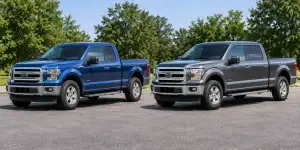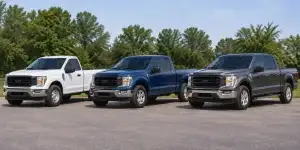

A crew cab has four full-size, front-hinged doors and a roomy back seat built for daily passengers. An extended cab has a shorter rear section with small or rear-hinged doors and far less rear legroom, so its back seat suits cargo or short trips more than adults.
If you carry people often, choose a crew cab. If you mostly need the space up front and a longer bed for less money, an extended cab is the practical pick.
The three truck cab types at a glance
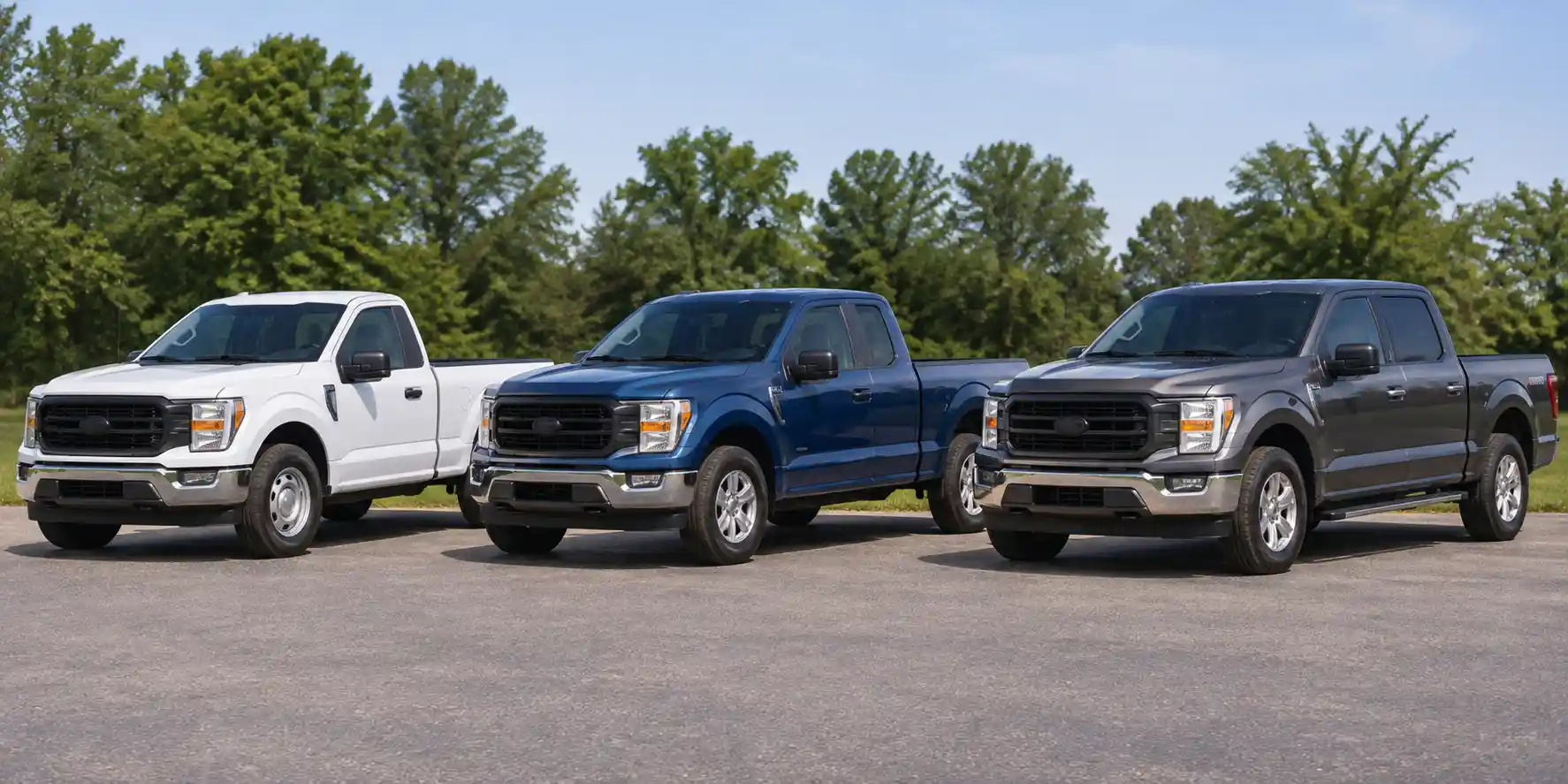
Every pickup starts with one of three cab shapes. The names change by brand, but the shapes stay the same.
| Cab type | Doors | Rear seat | Typical seating | Typical bed lengths | Best for |
|---|---|---|---|---|---|
| Regular cab (single cab) | 2 front-hinged | None, or small jump seats | 2 to 3 | 6.5 ft or 8 ft | Work, fleet, hauling long loads |
| Extended cab | 2 front, plus 2 small or rear-hinged | Small, folds flat for cargo | 4 to 6 | 6 ft to 6.5 ft | Part-time riders and more bed length |
| Crew cab | 4 full-size, front-hinged | Full, adult-friendly | 5 to 6 | 5 ft to 6.5 ft | Families, car seats, daily passengers |
These are the three types of truck cabs you will see on a dealer lot. The rest of this guide shows what each one is really like and what every brand calls it.
What is a crew cab?
A crew cab is the largest common cab style. It has four full-size doors that all open from the front edge, plus a full rear bench or two rear bucket seats. The back seat has enough legroom for adults to ride in comfort, which is why crew cabs are the top pick for families.
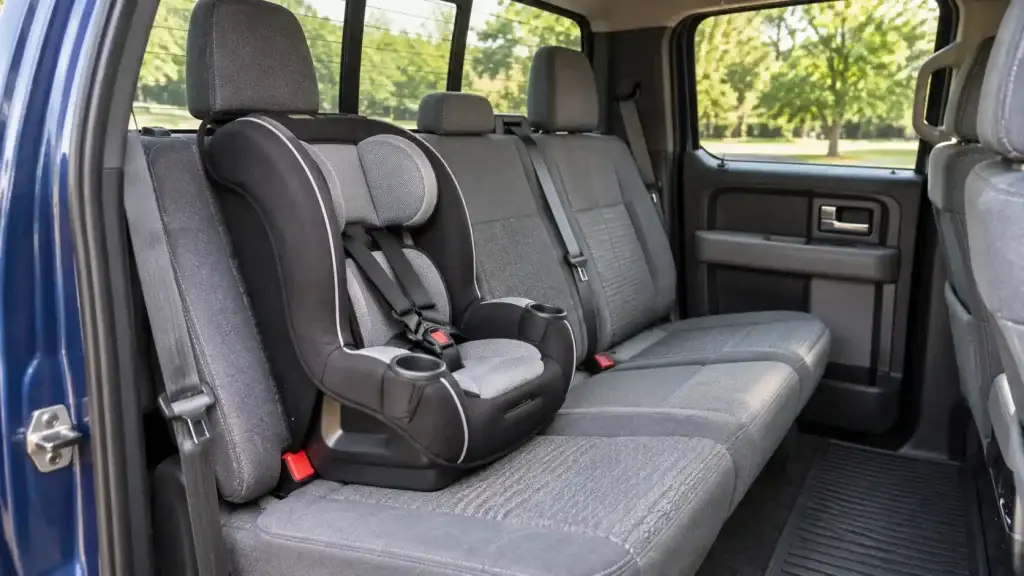
Most crew cabs seat five or six people. Because the cab takes up more of the truck’s length, a crew cab usually comes with a shorter bed than the same truck in a smaller cab.
What is an extended cab (and what is a club cab)?
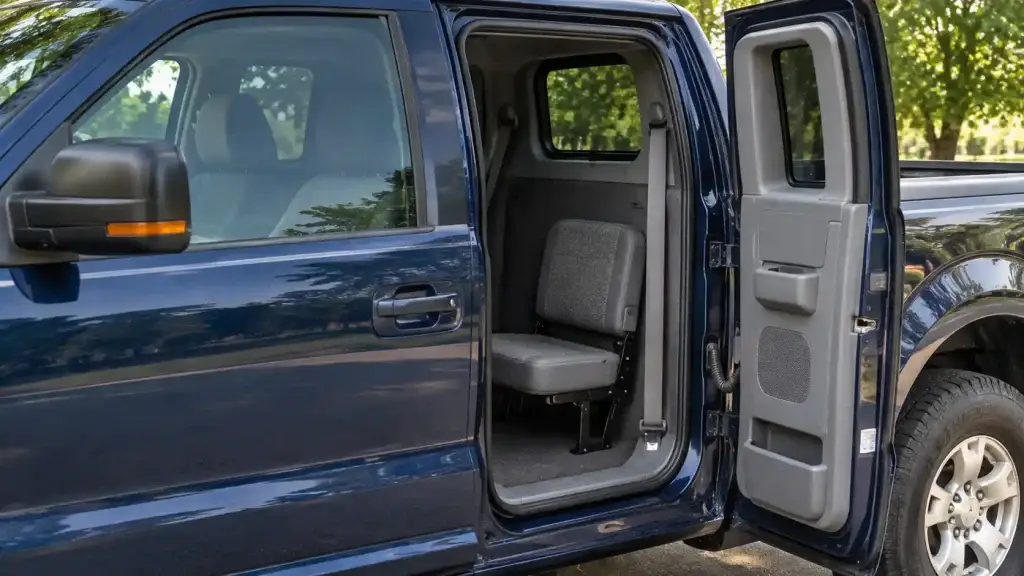
An extended cab adds a small second row behind the front seats. You reach it through compact rear doors that often hinge at the back instead of the front. People sometimes call those rear-hinged panels suicide doors or half doors.
The rear seats fold flat for cargo and work well for tools, bags, or the occasional passenger. Rear legroom is tight, so adults will not want to sit back there for long.
What is a club cab? Club Cab is just an older brand name for an extended cab. The idea is the same, a cab with two front doors, a small rear area, and limited back-seat room.
Crew cab vs extended cab: a side-by-side look
The gap between a crew cab and an extended cab shows up most in the back seat. Here is how real trucks compare on rear legroom.
| Truck | Extended cab rear legroom | Crew cab rear legroom |
|---|---|---|
| Ford F-150 | SuperCab 33.5 in | SuperCrew 43.6 in |
| Chevy Silverado 1500 | Double Cab 35.2 in | Crew Cab 43.4 in |
| Ram 1500 | Quad Cab about 35.6 in | Crew Cab 45.2 in |
| Toyota Tundra | Double Cab 33.3 in | CrewMax 41.6 in |
That is roughly 8 to 10 inches of extra rear legroom in the crew cab on most full-size trucks. Here is how the two cabs compare on the rest.
Door style. A crew cab has four full doors that all open from the front. An extended cab has two full front doors and two small rear doors, often rear-hinged, so you usually open the front door first.
Price. Extended cabs cost less than the crew cab version of the same truck and trim. The savings is one of the main reasons work buyers still choose them.
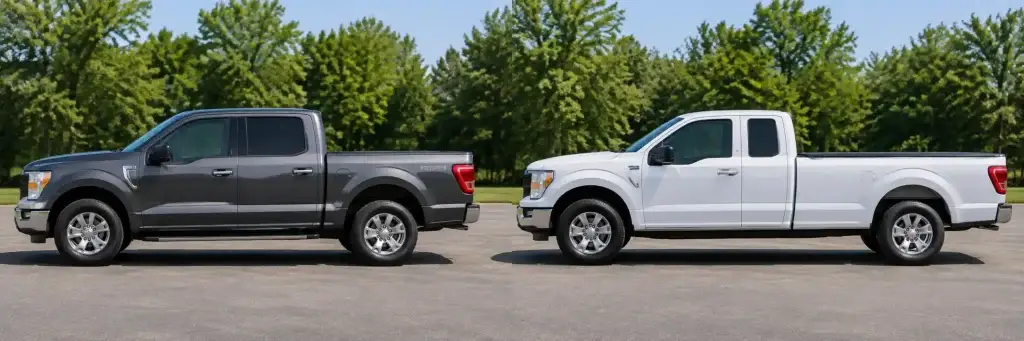
Bed length. At a given overall length, a crew cab means a shorter bed. A Ford F-150 SuperCab pairs with a 6.5-foot bed, while the SuperCrew offers a 5.5 or 6.5-foot bed. Some crew-only trucks, like the current Ranger, come only with a 5-foot bed.
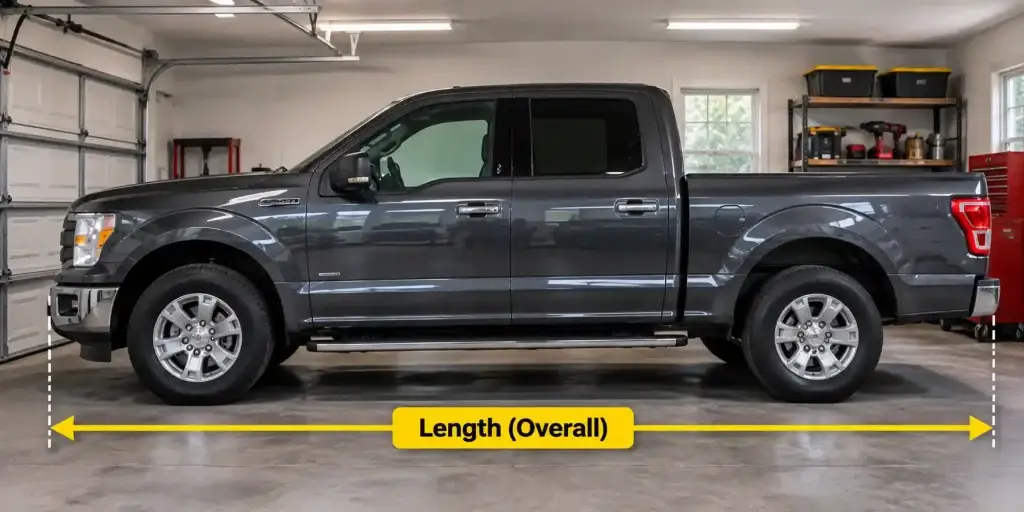
Overall length and parking. The crew cab’s longer cab makes the whole truck longer for the same bed, so it is harder to fit in a tight garage or parking spot. A full-size F-150 ranges from about 232 inches as a Regular Cab to about 244 inches as a SuperCrew.
Towing and payload. Both cabs can tow, and the ratings are close. The extended cab is lighter, so it can carry a bit more payload, while the crew cab’s extra weight trims payload slightly. Match the cab to how many riders you bring, then check the numbers, like the Ford Ranger towing capacity, for your exact setup.
Fuel economy. The difference is small. A crew cab’s added weight can cost a little fuel economy, but engine and drivetrain matter far more than cab size.
Resale. Crew cabs hold strong resale value because buyers want them as family trucks. That demand helps a crew cab keep its value better than an extended cab over time.
So double cab vs extended cab, or crew cab vs extended cab, really comes down to one question. Do you need a real back seat, or do you want a longer bed and a lower price?
Truck cab names by brand
Every brand uses its own words for the same three cabs. This table lines them up so you can match any name to a shape. These reflect the current US lineups.
| Brand | Regular / single cab | Extended cab | Crew cab |
|---|---|---|---|
| Ford (F-150, Ranger, Maverick, Super Duty) | Regular Cab | SuperCab | SuperCrew (Super Duty crew is called Crew Cab) |
| Chevrolet and GMC | Regular Cab | Double Cab | Crew Cab |
| Ram | Regular Cab (HD only) | Quad Cab (Ram 1500) | Crew Cab, plus Mega Cab on HD |
| Toyota (Tacoma, Tundra) | Not offered today | XtraCab (Tacoma), Double Cab (Tundra) | Double Cab (Tacoma), CrewMax (Tundra) |
| Nissan (Frontier) | Not offered today | King Cab | Crew Cab |
A few points save a lot of confusion:
- Toyota uses Double Cab two ways. On the Tacoma, the Double Cab is a full four-door crew cab. On the Tundra, the Double Cab is the extended cab, while the full crew cab is the CrewMax. Same words, two different cabs.
- Toyota dropped the Access Cab name on the newest Tacoma. The extended Tacoma is now the XtraCab, with two seats and no rear doors.
- The Ford F-150 and Super Duty still offer all three cabs. The current Ranger and Maverick come only as a SuperCrew crew cab.
- The Ram 1500 comes only as a Quad Cab or Crew Cab. The Regular Cab and the big Mega Cab live on the Ram Heavy Duty line.
- The Nissan Frontier comes only as a King Cab or Crew Cab, with no single cab. The mid-size Chevy Colorado and GMC Canyon are crew cab only now too.
Crew cab vs double cab
Double Cab is the Chevy, GMC, and Toyota word, but it does not always mean the same thing. On a Chevy Silverado or a Toyota Tacoma, the Double Cab is a crew cab with four full doors. On a Toyota Tundra, the Double Cab is the extended cab. Check the rear legroom, not just the name. You can confirm the current Silverado 1500 cab options on Chevrolet’s site.
Crew cab vs quad cab
Quad Cab is Ram’s name for the smaller four-door cab on the Ram 1500. Its four doors all open from the front, but the rear section is shorter than the Crew Cab, so there is less back-seat room. The Ram 1500 Crew Cab gives rear riders about 45 inches of legroom, near the top of the full-size class. So what is a quad cab? It is Ram’s version of an extended cab with full doors.
Crew cab vs King Cab
King Cab is Nissan’s extended cab on the Frontier. It has two full front doors and two small rear-hinged doors for a tight back seat. The Frontier Crew Cab swaps those half doors for four full doors and a usable rear bench.
XtraCab vs Double Cab (Toyota Tacoma)
On the current Tacoma, the XtraCab is the extended cab. It has two doors, two seats, and storage space behind them instead of a real back seat. The Double Cab is the crew cab, with four doors and room for five. Toyota used to call the extended Tacoma an Access Cab, so older listings may still show that name.
CrewMax vs Double Cab (Toyota Tundra)
On the Tundra, the CrewMax is the full crew cab, with four large doors and about 41.6 inches of rear legroom. The Double Cab is the extended cab, with half-size rear doors and about 33.3 inches of rear legroom. A Tundra Double Cab is much tighter in back than a Tundra CrewMax.
Crew cab vs Mega Cab
Mega Cab is Ram’s extra-large crew cab, offered on the Ram Heavy Duty trucks. It stretches the cab even further than the Crew Cab for limo-like rear legroom and reclining back seats. The trade-off is a shorter bed and a longer truck that is harder to park.
Ford’s cab names: Regular Cab vs SuperCab vs SuperCrew
Ford uses its own labels across the F-Series. The Regular Cab is the single-cab work truck. The SuperCab is Ford’s extended cab, with small rear-hinged doors and a tight back seat. The SuperCrew is Ford’s crew cab, with four full doors and the most rear legroom.
What is a SuperCab? It is the F-Series extended cab. What is a SuperCrew? It is the F-Series crew cab. On the F-150, the SuperCab gives 33.5 inches of rear legroom while the SuperCrew gives 43.6 inches. You can pair either cab with trims like the F-150 STX, and the current Ranger and Maverick come only as a SuperCrew.
You can confirm the latest F-150 cab and bed options on Ford’s own site. For a deeper breakdown of the two Ford cabs, see our full guide to SuperCab vs SuperCrew.
Regular cab vs crew cab
A regular cab, also called a single cab, is the smallest option. It has one row of seats, two doors, and room for two or three people. A crew cab sits at the other end, with four doors and two full rows.
Single cab vs crew cab really comes down to people versus payload. The regular cab keeps the truck short and the bed long for work. The crew cab trades some bed length and a higher price for a real back seat your family can use every day.
Which cab should you buy?
Start with how you use the truck, then pick the cab that fits.
Family and car seats. Choose a crew cab. Four full doors make it easy to reach the LATCH anchors and lift a child in and out, and the wide rear seat fits two or three car seats.
Work and fleet. A regular or extended cab costs less and gives you a longer bed. For crews that haul gear more than people, that trade is usually worth it.
Towing. Any cab can tow, so match the cab to how many riders come along, then confirm the rating for your engine and axle. A crew cab lets passengers ride in comfort on long tow days.
Off-road. A crew cab carries friends to the trail, but a shorter extended or regular cab has a tighter wheelbase that can help on narrow trails.
City parking. A smaller cab or a short bed fits garages and parking spots better. A crew cab with a 5.5-foot bed is a good middle path for city drivers who still want a back seat.
Budget. An extended cab saves money up front, while a crew cab holds resale value better. If you plan to sell in a few years, the crew cab often costs less to own.
Shopping used? Our list of the best F-150 years can help you match a strong model year to the cab you want.
How to tell which cab your truck has
Not sure what cab you are looking at? Three quick checks sort it out.
- Count the doors and look at the hinges. Two doors is a regular cab. Four small or rear-hinged doors is an extended cab. Four full doors that all open from the front is a crew cab.
- Read the window sticker or build sheet. The cab name is printed there, such as SuperCrew, Double Cab, or Quad Cab.
- Decode the VIN. The cab style is built into the VIN, and a free VIN decoder or your dealer can translate it. A factory-style Ford F-150 repair manual also lists the body and cab codes if you want to confirm it yourself.
Frequently asked questions
How do I know what cab my truck is?
Count the doors and check the hinges. Two doors is a regular cab, four small or rear-hinged doors is an extended cab, and four full front-hinged doors is a crew cab. The window sticker and the VIN also list the exact cab name.
Is a SuperCrew an extended cab?
No. A SuperCrew is Ford’s crew cab, with four full-size doors and a roomy back seat. Ford’s extended cab is the SuperCab, which has smaller rear-hinged doors.
What is an extended cab called?
It goes by many brand names. Ford calls it a SuperCab, Ram calls it a Quad Cab on the 1500, Nissan calls it a King Cab, and Toyota calls it a Double Cab on the Tundra and an XtraCab on the Tacoma. Older trucks used Club Cab and Access Cab.
Which cab size is best for families?
A crew cab. Its four full doors and adult-size rear seat make it the easiest cab for car seats, kids, and passengers of any age.