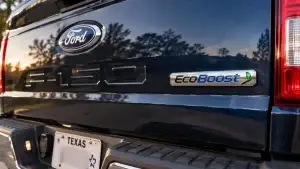

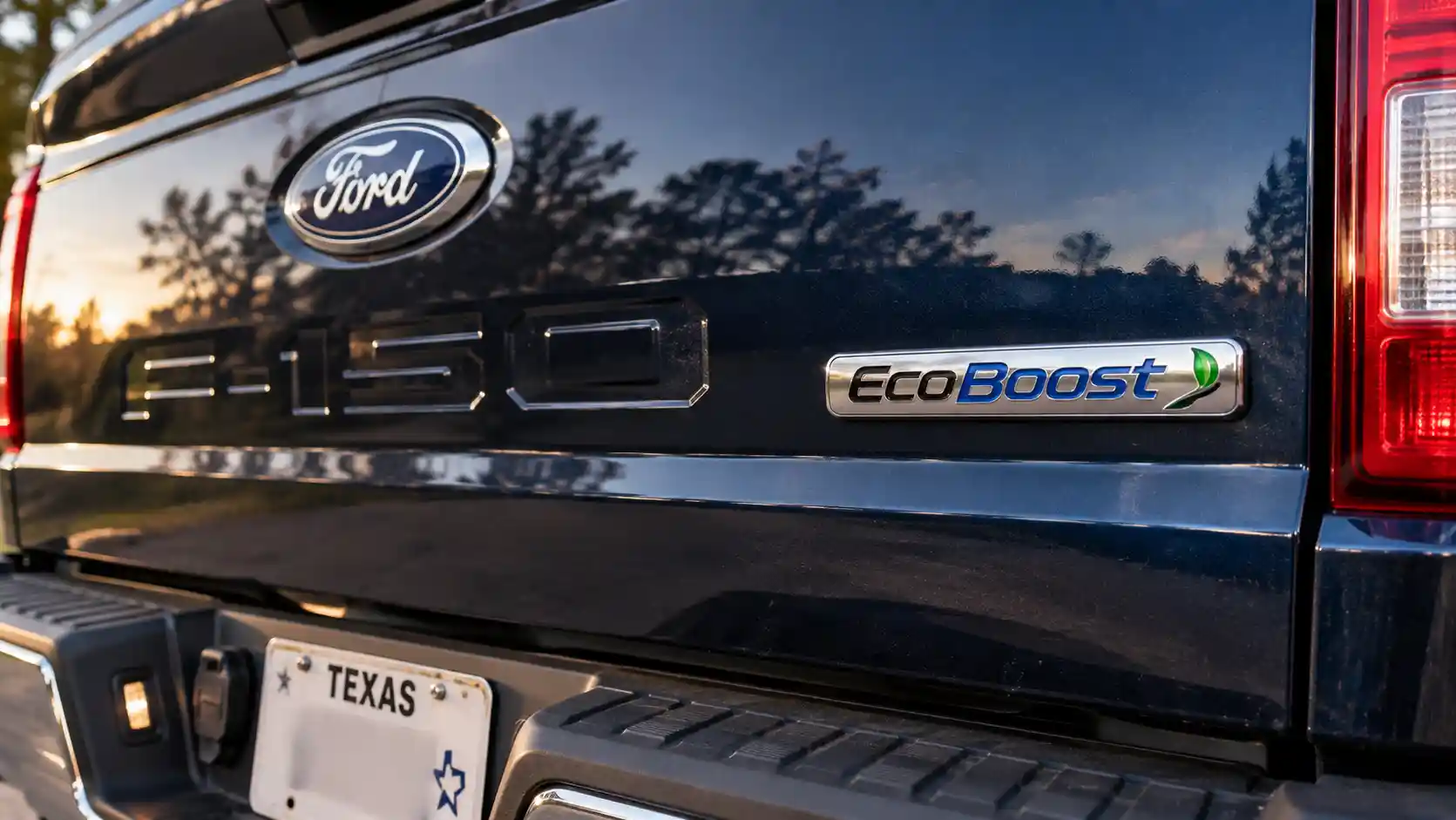
If you’ve shopped for a Ford in the last 15 years, you’ve seen the word “EcoBoost” on window stickers, tailgates and fenders. It’s on the base F-150, the four-cylinder Mustang, the Bronco, the Explorer and almost everything in between.
But what is an EcoBoost engine, really? Is it a hybrid? A special kind of turbo? A marketing name? And are Ford EcoBoost engines reliable enough to buy?
This guide answers all of it in plain English: what the name means, how the technology works, every EcoBoost engine size Ford has sold in the US, which vehicles use them, the real pros and cons, and which ones have the best and worst track records.
Quick answer: What is an EcoBoost engine? An EcoBoost engine is Ford’s family of turbocharged, direct-injection gasoline engines. By combining a turbocharger, direct fuel injection and variable valve timing, a smaller EcoBoost engine makes the power of a larger one while using less fuel. Ford has built EcoBoost engines since 2009 in sizes from a 1.0-liter three-cylinder to a 3.5-liter twin-turbo V6.
What Does EcoBoost Mean?
The EcoBoost meaning is right there in the name: “Eco” stands for economy (better fuel economy and lower emissions) and “Boost” refers to turbo boost, the pressurized air a turbocharger forces into the engine.
Put together, the EcoBoost definition is simple: an engine that gets more power from less displacement by boosting it with a turbo, so you get the efficiency of a small engine and the performance of a big one. It’s a gasoline engine, not a hybrid and not a diesel.
A few quick facts on the name:
- It started as “TwinForce.” Ford first showed the twin-turbo V6 in the 2007 Lincoln MKR concept under the TwinForce name, then renamed it EcoBoost in 2008.
- Production began on May 19, 2009 at Ford’s Cleveland Engine Plant No. 1 in Ohio. The first production EcoBoost was the 3.5L V6 in the 2010 Lincoln MKS, Ford Flex, Taurus SHO and Lincoln MKT.
- Ford’s original claim was up to 20% better fuel efficiency and 15% fewer greenhouse emissions than larger engines with similar power.
- Lincoln uses the same engines but doesn’t put the EcoBoost name on its badges.
- EcoBoost isn’t Eco Mode. Eco Mode is a driving setting that softens throttle response; EcoBoost is the engine hardware.
How Does an EcoBoost Engine Work?
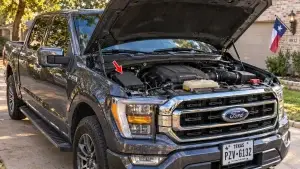
An EcoBoost engine works by combining three technologies that each solve part of the same problem: how to make a small engine act like a big one without burning more fuel. Ford’s own EcoBoost explainer lists the same three: turbocharging, direct fuel injection and variable camshaft timing.
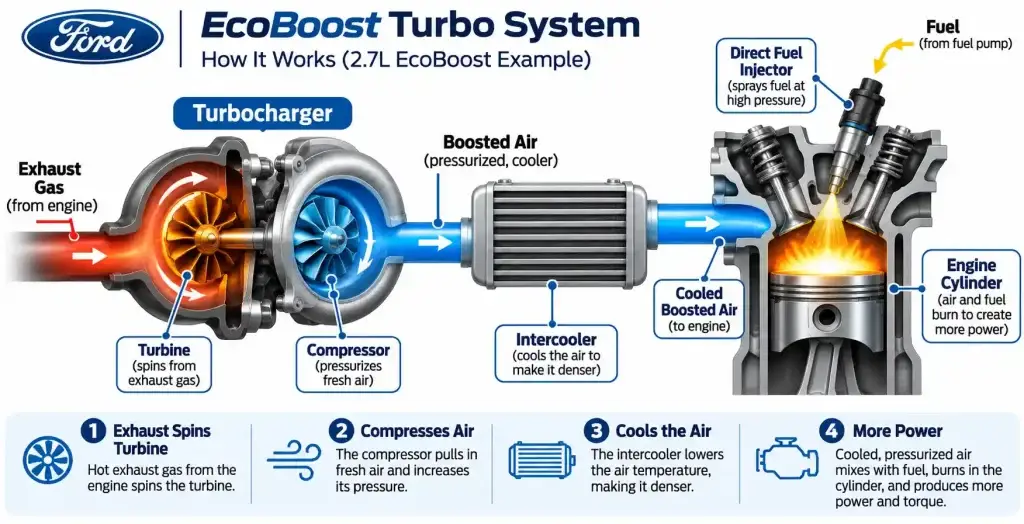
1. Turbocharging: free power from exhaust
In a normal engine, hot exhaust gas just leaves through the tailpipe. In an EcoBoost, that exhaust spins a turbine inside the turbocharger. The turbine is connected to a compressor wheel on the other side, which pulls in fresh air and packs it into the engine under pressure. That pressure is the “boost.”
More air means the engine can burn more fuel per stroke, which means more power from the same displacement. The V6 EcoBoosts use two small turbos, one per cylinder bank (twin-turbo), so each turbo spools quickly and turbo lag is minimal. The four-cylinder engines use a single turbo, often a twin-scroll design that separates exhaust pulses for faster response.
2. The intercooler: cooling the boosted air
Compressing air heats it up, and hot air is less dense. Before the boosted air reaches the engine, it passes through an intercooler (also called a charge air cooler), usually mounted behind the grille. Cooler air carries more oxygen and resists engine knock, so the engine can run more boost safely.
3. Gasoline direct injection (GTDI)
Ford’s engineering name for these engines is GTDI: gasoline turbocharged direct injection. Instead of spraying fuel into the intake port, the injectors spray finely atomized fuel straight into each cylinder at very high pressure. On the 3.5L V6 the fuel system reaches up to 2,150 psi.
Injecting fuel directly into the cylinder cools the air charge, which lets the engine run more boost and more compression without knocking. It also gives the computer precise control over how much fuel goes in and when.
4. Variable cam timing (Ti-VCT)
Most EcoBoost engines use Twin Independent Variable Cam Timing (Ti-VCT), which adjusts the intake and exhaust camshafts separately as engine speed and load change. That broadens the torque curve, so the engine pulls hard from low rpm and still breathes well at high rpm.
5. Dual injection on newer engines
Newer EcoBoosts, including the second-generation 3.5L V6 (2017 on), the second-generation 2.7L V6 (2018 on), the 1.5L three-cylinder and the 2024-on Mustang 2.3L, add port injectors alongside the direct injectors. Ford calls this dual injection or PFDI. Port injection sprays fuel over the intake valves, which keeps them clean and prevents the carbon buildup that direct-injection-only engines are known for.
Why downsizing works
Put those pieces together and you get downsizing: replacing a large engine with a smaller, boosted one. In the 2018 F-150, the 2.7L twin-turbo V6 matched the peak torque of the 5.0L V8 offered alongside it, and reached it at much lower rpm. When you’re cruising, the small engine sips fuel like a small engine. When you need power, the turbos deliver it.
Every Ford EcoBoost Engine Size
Ford has sold eight EcoBoost displacements in the US (nine engines, since there are two different 1.5Ls), from a tiny three-cylinder to a twin-turbo V6 that also powered the Ford GT supercar. Output varies by vehicle, so the table gives the range. Years are US model years.
| Engine | Layout | US model years | Output range | Typical vehicles | Known for |
|---|---|---|---|---|---|
| 1.0L | Inline-3 | 2014–2022 | About 123 hp | Fiesta, Focus, EcoSport | Tiny, efficient; oil-bathed “wet” timing belt; oil pump belt recall |
| 1.5L | Inline-4 | 2014–2020 | 179–181 hp | Fusion, 2017–2019 Escape | Coolant intrusion bulletin and extended coverage |
| 1.5L | Inline-3 | 2020–present | 180–181 hp | 2020–2026 Escape, Bronco Sport | Port + direct injection, cylinder deactivation; fuel injector recall (2020–2023) |
| 1.6L | Inline-4 | 2013–2019 | 178–197 hp | 2013–2016 Escape, Fusion, Fiesta ST, Transit Connect | Fun in the Fiesta ST; overheating and fire recalls |
| 2.0L | Inline-4 | 2011–present | 240–252 hp | Edge, Escape, Fusion, Explorer, Focus ST, Bronco Sport, Maverick | The workhorse four; coolant intrusion on 2015–2019 engines |
| 2.3L | Inline-4 | 2015–present | 270–350 hp | Mustang, Ranger, Bronco, Explorer, Focus RS | Strong, tunable; Mustang EcoBoost engine |
| 2.7L | Twin-turbo V6 | 2015–present | 315–335 hp | F-150, Bronco, Ranger, Edge ST, Fusion Sport | Compacted graphite iron block; 2021–2022 valve recall |
| 3.0L | Twin-turbo V6 | 2017–present | 325–418 hp | Explorer ST, Bronco Raptor, Ranger Raptor, Lincoln Aviator, 2027 F-150 | Bored-out 2.7; shares the 2021–2022 valve recall |
| 3.5L | Twin-turbo V6 | 2010–present | 310–660 hp | F-150, Raptor, Expedition, Navigator, Transit, Explorer Sport, Taurus SHO, Ford GT | The original; cam phaser and timing chain history |
For engine codes, bore and stroke, and international versions (including European-only engines like the mild-hybrid 1.0L), Wikipedia’s Ford EcoBoost engine page is the most complete public reference.
Ford EcoBoost 4-cylinder engines
Ford’s EcoBoost 4-cylinder lineup covers the 1.5L, 1.6L, 2.0L and 2.3L. The 2.0L replaced V6 engines in midsize crossovers like the Edge and Explorer, and it’s the one you’ll most often find in a used Escape, Fusion, Bronco Sport or Maverick. The 2.3L is the performance four, built from a Mazda-derived block with a twin-scroll turbo.
2.3L EcoBoost horsepower
The 2.3L I4 EcoBoost engine’s output depends on the vehicle: 270 hp in the Ranger, 280 to 300 hp in the Explorer, 300 hp in the Bronco, and 350 hp in the 2016–2018 Focus RS. In the Mustang, it made 310 hp from 2015 to 2023 (330 hp with the 2020–2023 High Performance Package) and 315 hp from 2024 on. The redesigned 2024 Mustang version added port injection and an electronic wastegate.
The newest EcoBoost: the 3.0L in the F-150
For 2027, Ford replaces the 2.7L with the 3.0L twin-turbo V6 as the F-150’s standard engine, rated at the same 325 hp and 400 lb-ft but with peak torque arriving at a lower 2,250 rpm. Read more about the new 3.0L EcoBoost base engine for 2027.
Which Ford Vehicles Use EcoBoost Engines?
Almost every gas-powered Ford sold in the US has offered an EcoBoost engine. Here’s what you’ll find in the most popular models.
Ford F-150 EcoBoost engine
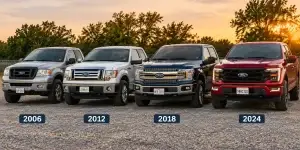
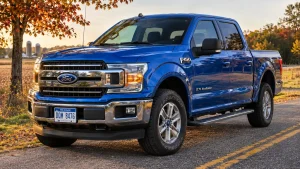
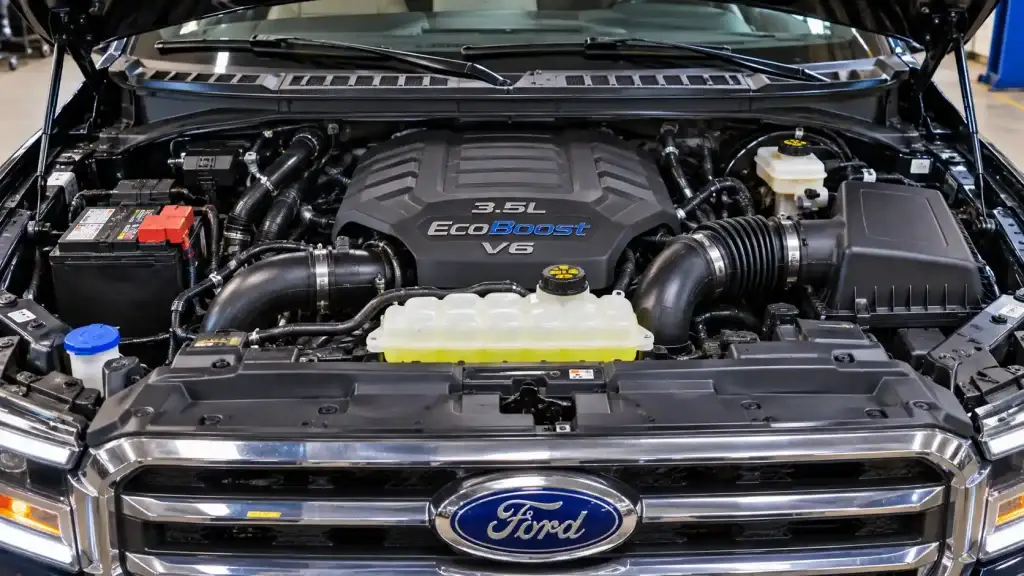
The F-150 is where EcoBoost made its name. Ford put the 3.5L twin-turbo V6 in the 2011 F-150, and its 420 lb-ft of torque quickly won over buyers who had sworn they’d only ever drive a V8. Today’s F-150 offers the 2.7L EcoBoost (325 hp), the 3.5L EcoBoost (400 hp), the 450-hp High-Output 3.5L in the Raptor and the 3.5L PowerBoost hybrid. For 2027, the 3.0L EcoBoost replaces the 2.7L.
Mustang EcoBoost engine
Since 2015, the Mustang has offered a 2.3L turbocharged four-cylinder EcoBoost as its base engine. It made 310 hp through 2023 (330 hp with the High Performance Package) and makes 315 hp in the 2024-on Mustang. With less weight over the front wheels than the V8 GT, it’s a favorite of drivers who like twisty roads. More on the car in our Ford Mustang guides.
If you work on your own 2015–2018 Mustang, a Ford Mustang 2015–2018 workshop manual gives you the factory service procedures, torque specs and wiring diagrams.
Ford Escape EcoBoost engine
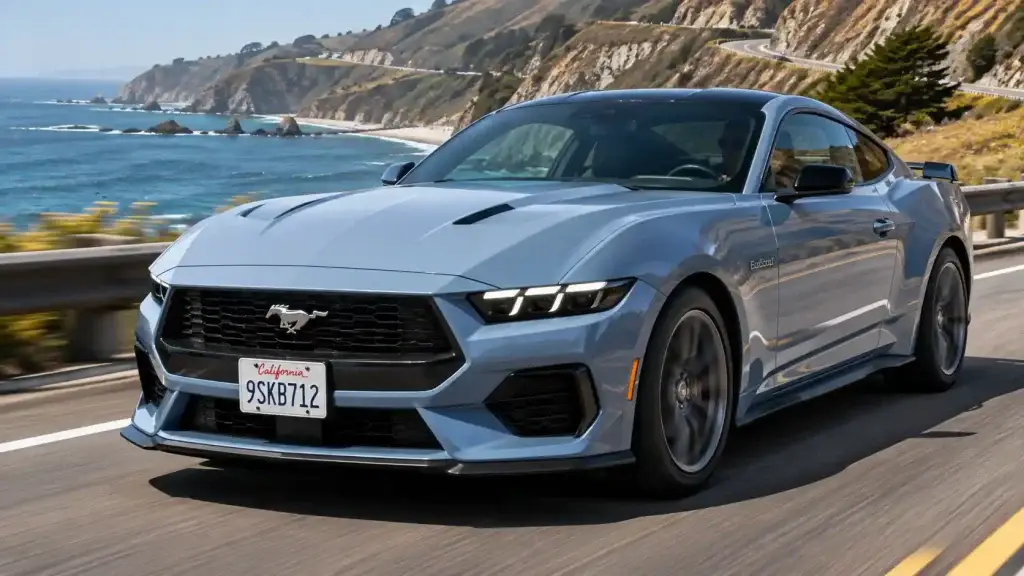
The Escape used EcoBoost power for most of its life: the 1.6L and 2.0L (2013–2016), the 1.5L four and 2.0L (2017–2019), then the 1.5L three-cylinder and 2.0L (2020–2026), alongside hybrid versions. Ford ended Escape production in December 2025, so new inventory is running out, but used ones are everywhere.
Ford Explorer
The Explorer has used the 2.0L (2011–2015), the 3.5L in the Explorer Sport (2013–2019), the 2.3L (2016 on) and the 3.0L twin-turbo V6 in the Explorer ST and Platinum (2020 on), rated up to 400 hp.
Ford Bronco and Bronco Sport
The Bronco offers the 2.3L four (300 hp), the 2.7L V6 (330 hp on premium fuel) and the 418-hp 3.0L in the Bronco Raptor. The smaller Bronco Sport uses the 1.5L three-cylinder or the 2.0L four.
Ford Ranger
The current Ranger uses the 2.3L (270 hp) as standard, the 2.7L V6 (315 hp) as an option, and a 405-hp 3.0L in the Ranger Raptor.
Ford Expedition
The Expedition switched to the 3.5L EcoBoost for 2015 and has used it ever since, in outputs up to 440 hp in the Timberline and Stealth Performance models.
Ford Edge
The Edge offered the 2.0L EcoBoost for most of its run and a 2.7L V6 in the Edge Sport (315 hp) and Edge ST (335 hp). Ford ended US Edge production in 2024.
Ford Maverick
The Maverick compact pickup offers a 2.0L EcoBoost (250 hp) alongside its standard hybrid.
EcoBoost Pros and Cons
EcoBoost engines are a trade-off, not magic. Here’s an honest look at both sides.
| Pros | Cons (EcoBoost disadvantages) |
|---|---|
| Big low-end torque, so they feel strong in everyday driving | Real-world fuel economy drops sharply when towing or driving hard, since boost means burning more fuel |
| Better EPA fuel economy than a larger engine with similar power | More parts to fail: turbos, intercooler, high-pressure fuel pump, wastegates |
| Lighter than a V8, which helps handling and payload | Direct-injection-only engines can build carbon on the intake valves |
| Power holds up better at high altitude, because the turbos compensate for thin air | Very sensitive to oil quality and change intervals |
| Easy to tune for more power | Some specific engines and years have well-documented defects (below) |
| Run on regular 87-octane gas | Make their advertised peak power on premium fuel, not regular |
| Lots of torque for towing in the V6 versions | Many repairs are labor-heavy because of tight packaging |
Premium vs regular fuel
Ford designs EcoBoost engines to run on 87-octane regular, and that’s what most owner’s manuals recommend for everyday driving. But the engines use knock sensors to adjust timing to the fuel you use, so premium fuel lets them make more power. The Bronco’s 2.7L, for example, is rated 330 hp on premium and 315 hp on regular. Ford recommends premium for severe duty like heavy towing in several owner’s manuals. Some high-performance models, like the Ford GT, require premium, so always follow your own owner’s manual.
Are EcoBoost Engines Reliable?
Mostly, yes, but it depends heavily on which engine and which year. “EcoBoost” covers nine different engines built across 17 years, so asking whether EcoBoost is reliable is like asking whether Ford trucks are reliable. Some versions have excellent records; a few have documented defects. Here’s a fair summary of each.
| Engine | Reliability summary |
|---|---|
| 1.0L I3 | The weakest US record. Its oil-bathed timing belt can degrade and starve the engine of oil pressure; Ford recalled 2016–2018 Focus and 2017–2021 EcoSport models over the oil pump drive belt, and NHTSA opened an investigation into 2015–2018 Focus and 2015–2017 Fiesta engines in December 2025. |
| 1.5L I4 | Coolant can leak into the cylinders on 2014–2019 Fusion and 2017–2019 Escape engines. Ford’s bulletin 19-2139 and program 21N12 cover short block replacement for 7 years or 84,000 miles. |
| 1.5L I3 | Generally decent; a fuel injector that can crack and leak led to a recall on 2020–2023 Escape models. |
| 1.6L I4 | Overheating and fire risk on 2013–2014 Escapes led to several recalls, and a 2017 recall covered more than 360,000 vehicles. |
| 2.0L I4 | Durable bottom end, but 2015–2019 twin-scroll engines are known for coolant intrusion. Ford changed the block’s coolant passages for the 2020 model year, which largely fixed it. |
| 2.3L I4 | One of the better EcoBoosts. Widely used and very tunable, and it hasn’t shown the widespread engine defects of some smaller EcoBoosts. |
| 2.7L V6 | Good overall. Gen 1 (2015–2017) has oil pan leaks; certain 2021–2022 engines built May–October 2021 were recalled for intake valves. See our full guide to 2.7 EcoBoost problems and reliability. |
| 3.0L V6 | Shares the 2021–2022 intake valve recall with the 2.7L; otherwise strong in the Explorer ST and Bronco Raptor. |
| 3.5L V6 | Proven over 15 years. 2011–2014 timing chains and 2017–2020 cam phasers are the known weak spots; 2021-on engines have the fewest complaints. See our full guide to 3.5 EcoBoost problems. |
Ford EcoBoost engine problems in general
Across the family, the most common Ford EcoBoost engine problems fall into a few patterns:
- Carbon buildup on intake valves in direct-injection-only engines (fixed on newer dual-injection engines)
- Coolant intrusion into the cylinders on some 1.5L, 1.6L and 2.0L four-cylinders
- Timing system wear: chain stretch on early 3.5L V6s, cam phaser rattle on 2017–2020 3.5L V6s, wet belt degradation on the 1.0L
- Turbo and oil leaks at high mileage
- Ignition wear: spark plugs and coils work harder under boost
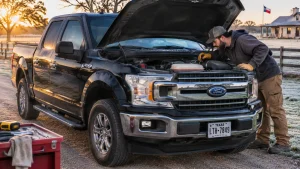
Most of these get worse with neglect. Changing the oil on time with the correct spec is the single best thing an EcoBoost owner can do.
1.0 EcoBoost engine problems
The 1.0L three-cylinder deserves its own note, because it shows up in searches so often. Its timing belt runs in engine oil (a “wet belt”), and on these engines the belt and the oil pump drive belt can wear early, shedding material or losing tension. If the oil pump loses drive, the engine loses oil pressure, which can destroy it quickly. In the US it was only sold in the Fiesta, Focus and EcoSport. If you’re considering one, check the VIN for open recalls and ask for proof of timing belt service.
Ford EcoBoost Engines to Avoid
No EcoBoost family is bad across the board, but these engine and year combinations have the most documented trouble. Avoid them unless you have repair records or the vehicle is cheap enough to cover a repair:
- 1.0L I3 in the 2014–2019 Fiesta, 2015–2018 Focus and 2018–2022 EcoSport
- 1.6L I4 in the 2013–2016 Escape and 2013–2014 Fusion
- 1.5L I4 in the 2017–2019 Escape and 2014–2019 Fusion, unless coolant intrusion repairs are documented
- 2.0L I4 in 2015–2019 Edge, Escape and Fusion models with signs of coolant loss
- 2.7L and 3.0L V6 from 2021–2022 builds, unless recall 24V-635 was completed
- 3.5L V6 in 2017–2019 trucks and SUVs without proof the cam phasers were replaced
In every case, run the VIN through NHTSA’s recall lookup and ask a Ford dealer about open service programs before you buy.
PowerBoost vs EcoBoost: What’s the Difference?
PowerBoost is Ford’s name for the F-150’s full hybrid powertrain, offered since 2021. It isn’t a different engine. It’s the same 3.5L twin-turbo EcoBoost V6 with an electric motor (about 47 hp) sandwiched between the engine and the 10-speed automatic, plus a battery pack.
| 3.5L EcoBoost | 3.5L PowerBoost hybrid | |
|---|---|---|
| What it is | Twin-turbo gas V6 | Same V6 + electric motor + battery |
| Output (2026 F-150) | 400 hp / 500 lb-ft | 430 hp / 570 lb-ft (combined) |
| Fuel economy | About 19–20 mpg combined | About 23–24 mpg combined |
| Max towing | 13,500 lb (best in the F-150 lineup) | Lower than the 3.5L EcoBoost |
| Onboard generator | 2.0 kW Pro Power Onboard available | 2.4 kW standard, 7.2 kW available |
| Best for | Heavy towing, lower purchase price | Mixed driving, job-site power, best mpg |
In short: every PowerBoost has an EcoBoost inside it, but not every EcoBoost is a PowerBoost. Choose PowerBoost if you want the most torque, the best fuel economy and a built-in generator. Choose the 3.5L EcoBoost if you tow at the limit or want the lower price.
EcoBoost vs V8: Quick Comparison
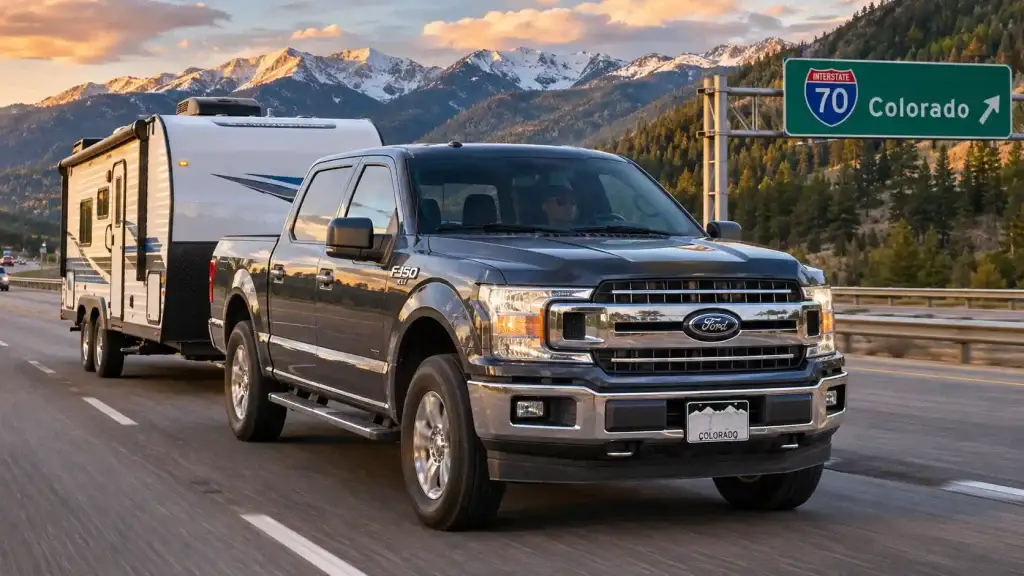
The classic F-150 question is twin-turbo V6 or Ford’s 5.0L Coyote V8.
| 2.7L EcoBoost V6 | 3.5L EcoBoost V6 | 5.0L V8 | |
|---|---|---|---|
| Output (2026 F-150) | 325 hp / 400 lb-ft | 400 hp / 500 lb-ft | 400 hp / 410 lb-ft |
| EPA combined mpg (4×2) | 21 | 20 | 19 |
| Max towing | 8,400 lb | 13,500 lb | Between the two |
| Feel | Strong low-end torque | Strongest low-end torque | Linear power, V8 sound |
| Complexity | Turbos, DI, intercooler | Turbos, DI, intercooler | Simpler, naturally aspirated |
The EcoBoost V6s make their torque lower in the rev range and tow more for the fuel they use. The V8 is simpler, sounds better and avoids turbo-related repairs, which is why many high-mileage owners still prefer it. Neither is objectively better; it depends on how you use the truck.
EcoBoost FAQs
How does an EcoBoost engine work?
An EcoBoost engine uses exhaust gas to spin a turbocharger, which forces extra air into the engine. An intercooler cools that air, and direct injectors spray fuel straight into each cylinder at high pressure. Variable cam timing adjusts the valves for each speed and load. Together, they let a smaller engine make big-engine power while using less fuel.
What is the average lifespan of a 3.5 EcoBoost engine?
A well-maintained 3.5 EcoBoost commonly lasts 200,000 miles or more, and many owners who follow Ford’s maintenance schedule report passing that mark. Regular oil changes with the correct oil, and addressing timing chain or cam phaser noise early, matter most.
Is the 2.3L EcoBoost I-4 a good engine?
Yes. The 2.3L EcoBoost I-4 is one of Ford’s better EcoBoost engines. It makes 270 to 315 hp depending on the vehicle, powers the Mustang, Ranger, Bronco and Explorer, and hasn’t shown the widespread defects of some smaller EcoBoosts. Like any turbo engine, it needs on-time oil changes.
Which EcoBoost to stay away from?
The EcoBoost engines with the most documented trouble are the 1.0L three-cylinder (wet timing belt and oil pump belt issues), the 2013–2014 1.6L (overheating recalls), and the 1.5L and 2.0L four-cylinders built before 2020 (coolant intrusion). Among the V6s, be careful with 2021–2022 2.7L and 3.0L engines without the valve recall done and 2017–2019 3.5L engines without new cam phasers.
Is an EcoBoost engine a hybrid?
No. An EcoBoost engine is a gasoline engine with a turbocharger. Ford’s hybrids, like the F-150 PowerBoost, pair an EcoBoost engine with an electric motor, but the EcoBoost name refers only to the gas engine.
Is an EcoBoost a V8?
No. EcoBoost engines are three-cylinder, four-cylinder or V6 designs. The V6 versions are built to deliver V8-like power and torque from a smaller engine.
How much horsepower does the Mustang EcoBoost have?
The Mustang EcoBoost’s 2.3L turbo four makes 315 hp in 2024 and newer models. From 2015 to 2023 it made 310 hp, or 330 hp with the High Performance Package (2020–2023).
How do I know which EcoBoost engine my Ford has?
Check the engine size on your window sticker, registration or owner’s manual, or look at the 8th character of your VIN, which Ford uses as the engine code. Many Ford models also show the displacement on a badge or on the engine cover.