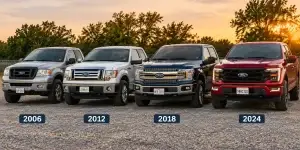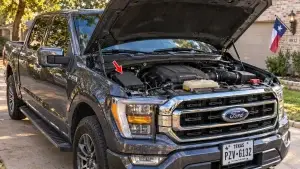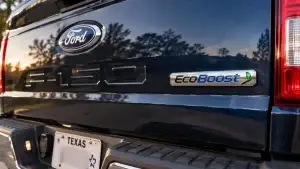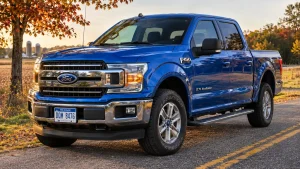

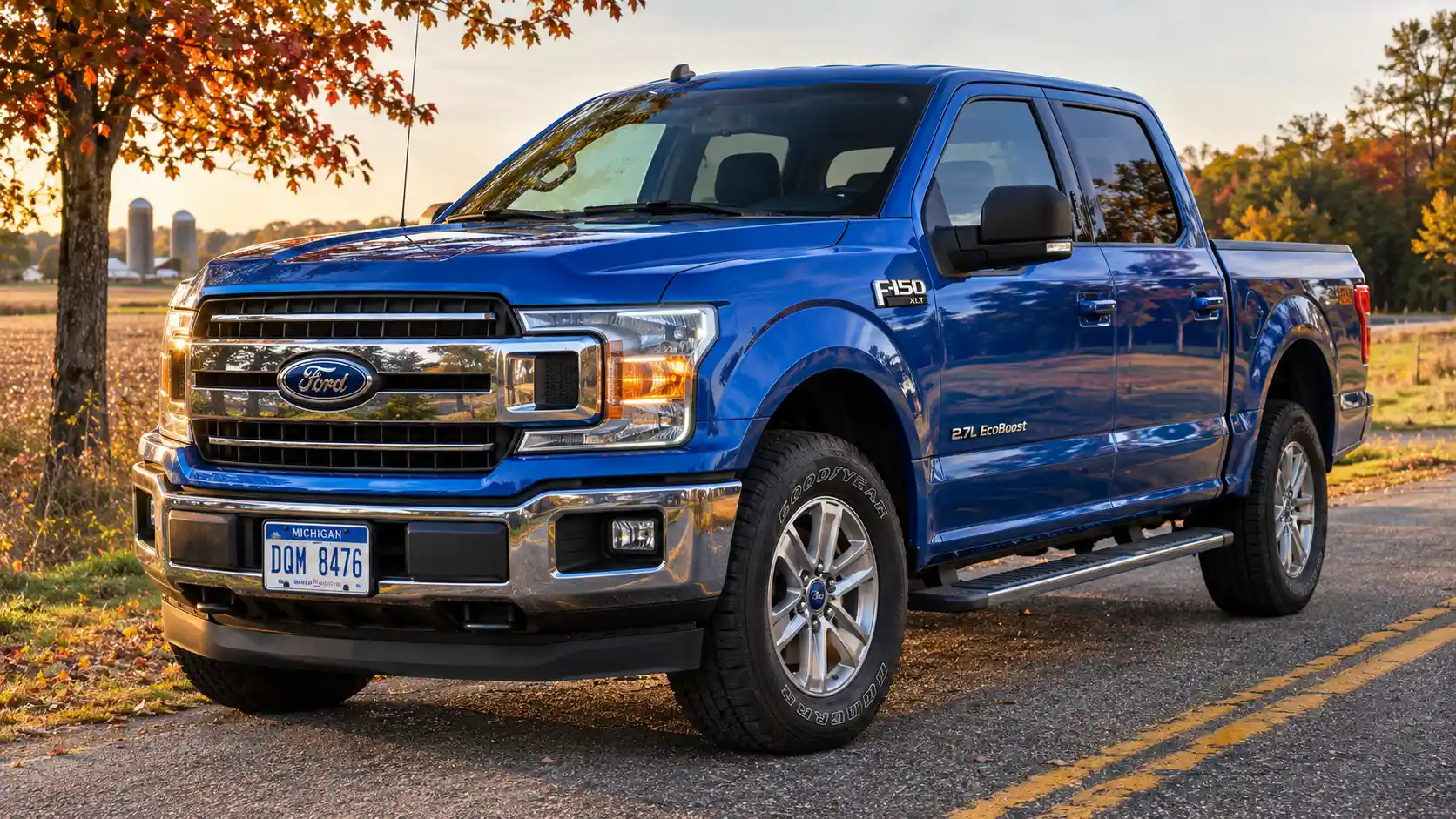
Ford’s 2.7 EcoBoost has quietly been one of the most important engines in America. It was the base engine in the best-selling truck in the country, and it powered the Bronco, Ranger, Edge ST and Lincoln Nautilus. It’s small, punchy, efficient, and when it’s healthy, it pulls like a V8.
But search “2.7 EcoBoost problems” and you’ll find videos of blown engines, a federal investigation and a recall. So is the 2.7 EcoBoost reliable, or a gamble?
The honest answer depends on the year. This guide covers every documented 2.7 EcoBoost issue by generation, the 2021–2022 intake valve recall and its extended warranty, the years to avoid, what repairs cost and how long the engine really lasts.
Quick answer: Is the 2.7 EcoBoost reliable? Yes. The Ford 2.7 EcoBoost is a reliable engine overall, and most well-maintained examples should pass 200,000 miles. Its weak spots are oil pan leaks and carbon buildup on 2015–2017 engines and broken intake valves on certain 2021–2022 engines built between May and October 2021, which Ford recalled. The 2019, 2020 and 2023 model years have the fewest complaints.
2.7 EcoBoost Specs at a Glance
Before getting into problems, here’s what the engine is. Figures are for the F-150 unless noted.
| Spec | 2.7 EcoBoost |
|---|---|
| Type | 2.7L (2,694 cc) twin-turbo 60° V6, Ford “Nano” engine family |
| Block | Compacted graphite iron |
| Fuel system | Direct injection (2015–2017); port + direct dual injection (2018 on) |
| 2.7 EcoBoost horsepower | 325 hp (F-150); 330 hp on premium / 315 hp on regular (Bronco); 315 hp (Ranger); 335 hp (Edge ST) |
| Torque | 375 lb-ft (2015–2017 F-150); 400 lb-ft (2018 on F-150); 415 lb-ft on premium (Bronco) |
| 2.7 EcoBoost towing capacity | Up to 8,400 lb (2026 F-150, properly equipped) |
| 2.7 EcoBoost MPG | 19 city / 25 hwy / 21 combined (2026 F-150 4×2, EPA); about 20 combined with 4×4 |
| 2.7 EcoBoost oil capacity | 6.0 quarts with filter |
| 2.7 EcoBoost oil type | SAE 5W-30 meeting the Ford spec in your owner’s manual |
| Fuel | 87 octane recommended; premium suggested for towing and severe duty |
| Transmission | 6-speed 6R80 (2015–2017 F-150); 10-speed 10R80 (2018 on) |
And to settle a common question: is the 2.7 EcoBoost twin turbo? Yes. It uses two small turbochargers, one for each cylinder bank, which is how a 2.7-liter V6 makes 400 lb-ft of torque.
1st Gen 2.7 EcoBoost Problems (2015–2017)
The 2.7 EcoBoost debuted in the 2015 aluminum-body F-150, built at Ford’s Lima, Ohio engine plant. The first-generation engine also went into the Edge Sport and ST, the Fusion Sport and several Lincolns. Its problems are well known and mostly fixable.
Oil pan leaks (the #1 Gen 1 issue)
Symptoms: Oil spots on the driveway, an oil-soaked skid plate or splash shield, a burning oil smell after a drive, and a dipstick that reads low between changes.
Cause: Ford used a composite plastic oil pan sealed to the block with RTV silicone instead of a gasket. Over time the RTV loses its grip on the plastic, and oil seeps out of the joint. Ford’s bulletin 19-2205 described the leak as poor adhesion at the oil pan RTV seal on 2015–2017 F-150s.
Fix: Ford has gone through several fixes. Bulletin 19-2205 replaced the pan with careful surface prep. When that pan became hard to get, bulletin 23-2083 switched 2015–2017 trucks to a later-style pan and added a valve cover inspection. Edge, MKX, Fusion, MKZ and Continental owners have their own bulletin, 24-2345. Ford’s labor time is 3.2 hours on a 4×2 F-150 and 4.1 hours on a 4×4.
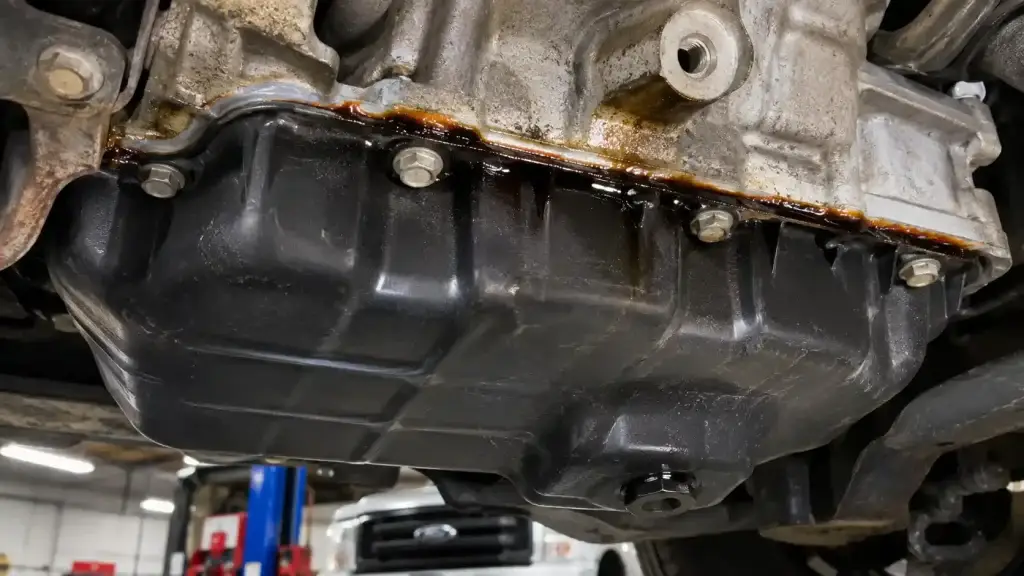
2.7 EcoBoost oil pan leak repair cost: Roughly $600 for the pan alone at most shops, and up to about $1,300 if the valve covers get replaced too.
2.7 EcoBoost oil pan upgrade: worth it?
Many owners skip another plastic pan and install an aftermarket aluminum one. Direct-fit aluminum pans are sold for 2015–2017 trucks, and some pans for 2018–2024 trucks add about two quarts of oil capacity. An aluminum pan won’t fix a bad RTV job, but it removes the plastic-to-RTV adhesion problem entirely. If you’re paying for the labor anyway, the upgrade is a sensible one. One caution: a warranty or bulletin repair will use Ford’s part, not an aftermarket pan.
2.7 EcoBoost carbon buildup
Symptoms: Rough cold idle, hesitation at light throttle, a misfire code or two, and a slow fade in power and fuel economy at higher mileage.
Cause: Gen 1 engines use direct injection only, so fuel never washes over the intake valves. Oil vapor from the crankcase ventilation system bakes onto the valves and turns into hard carbon.
Fix: Walnut blasting removes the intake manifold and blasts each port clean with crushed walnut shell. Shops typically charge $400 to $1,200. Ford solved this on the Gen 2 engine by adding port injectors, which spray fuel onto the backs of the valves and keep them clean.
Cold-start smoke and oil consumption
Symptoms: A puff of white or blue smoke at startup after the vehicle has sat, rough idle when hot, a check engine light and oil use of a quart or more between changes.
Cause: On some 2015–2017 F-150s, Ford issued a 2019 bulletin for excessive smoke at startup after a cold soak. On 2016–2017 Edge and MKX and 2017 Fusion, MKZ and Continental models built between April 1, 2016 and January 1, 2017, Ford’s bulletin 19-2243 traced smoke and oil consumption of 1 quart in under 3,000 miles to the valve guides.
Fix: For the cars and crossovers in that build window, the bulletin fix is new cylinder heads, a big job. This is the most common source of Ford Edge 2.7 EcoBoost problems, so check the build date on any 2016–2017 Edge Sport.
2.7 EcoBoost misfire: spark plugs and ignition coils
Symptoms: A shudder or stumble under load, especially when towing or passing, with a flashing check engine light.
Cause: Turbocharged engines are hard on spark plugs and coils. Worn plugs with a widened gap, or a weak coil, can’t fire reliably under boost.
Fix: New plugs gapped to spec, plus any failed coil. Plugs run about $40 to $100 for a set, and coils about $200 to $300 if you replace several. It’s an easy DIY job on the 2.7.
Timing chain concerns
The Gen 1 2.7 uses a single-chain timing setup, and some owners report chain rattle at higher mileage. Ford redesigned the timing system for 2018. Timing chain trouble is far less common on the 2.7 than on the early 3.5 EcoBoost. If you do need a 2.7 EcoBoost timing chain job, expect about $1,400 to $2,000 to replace the chain, guides and tensioners at an independent shop.
One more Gen 1 detail: Ford’s service message SSM 49221 tells technicians that when a 2015–2017 2.7 or 3.0 gets a replacement short block, the engine must be converted to a belt-driven oil pump with new camshafts and related parts. If you’re buying a Gen 1 with a “new engine,” ask for the invoice.
2nd Gen 2.7 EcoBoost Problems (2018–2026)
For 2018, Ford gave the F-150 an updated 2.7 EcoBoost with port and direct injection, a revised two-chain timing system, lighter turbine wheels, electronically controlled wastegates and the 10-speed automatic. Torque rose to 400 lb-ft. The same generation went into the Bronco from 2021 and the Ranger from 2024.
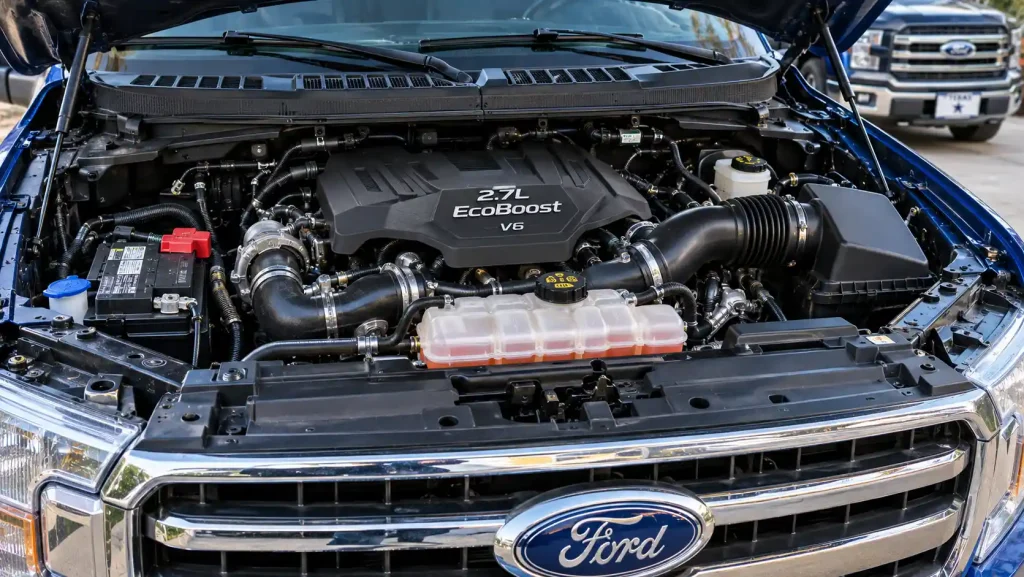
Overall, the Gen 2 is the better engine. Port injection all but ended carbon buildup, and most early oil pan leaks were addressed. But it has its own list, headlined by the 2021–2022 intake valve recall covered in the next section.
Oil pan leaks on early Gen 2 trucks (2018–2019)
The leak didn’t vanish overnight. Ford bulletin 19-2189 covers 2018–2019 F-150s with the 2.7 built on or before May 21, 2019. The fix is a new oil pan with a press-in-place gasket instead of RTV. Trucks built after that date got the improved pan from the factory.
Cam phaser rattle on cold starts
Symptoms: A 2–5 second rattle from the front of the engine on startup after the vehicle sits for six hours or more.
Cause: Parts inside the variable cam timing (VCT) units stick, so the phaser rattles until oil pressure builds.
Fix: Ford issued special service message SSM 51542 for 2020–2023 F-150s and 2021–2023 Broncos, and bulletin 22-2376 for 2019–2022 Edges and Nautilus models. The repair replaces the affected VCT units. This is a much smaller problem on the 2.7 than the cam phaser saga on the 3.5 EcoBoost, but listen for it on any used truck.
A separate Ford message, SSM 51665, covers a thump or knock from the left cylinder head on some 2021–2023 2.7L and 3.0L engines. Ford says that noise doesn’t affect durability and won’t get worse.
2.7 EcoBoost wastegate rattle
Symptoms: A metallic rattle or buzz from the turbo area, often at idle, on deceleration or when you lift off the throttle.
Cause: Wear in the turbocharger wastegate linkage lets parts vibrate against each other.
Fix: Ford bulletin 25-2008, later superseded by 25-2215, covers wastegate rattle on 2024 F-150s with the 2.7 built on or before October 4, 2024. Older trucks with the same noise usually need the wastegate linkage serviced or, if it’s worn badly, a turbo replacement.
2.7 EcoBoost turbo replacement cost
Turbo failures on the 2.7 aren’t common, but they happen at high mileage, especially on trucks with stretched oil change intervals or lots of hard towing.
| Item | Typical cost |
|---|---|
| Aftermarket replacement turbo (one side) | About $470–$560 |
| Aftermarket twin-turbo kit | About $765 |
| Labor | Roughly 6–8 hours per side |
| One turbo replaced, parts and labor | About $1,200–$2,500 |
| Both turbos at a shop | About $2,000–$5,000 |
2.7 EcoBoost turbo oil feed line replacement
Each turbo gets oil through a small feed line and returns it through a drain line, and both live in a lot of heat. Over time the fittings and seals can seep. The line itself is inexpensive, but on some trucks the turbo or the downpipe has to come out to reach it. That puts most turbo oil feed line replacements in the few-hundred to roughly $1,000 range, depending on access. If one line leaks, replace its partner and the seals while you’re in there.
Bronco 2.7 engine failure
The early Bronco took the worst of the 2.7’s bad reputation. Starting in 2021, owners reported sudden engine failures at low mileage, often at highway speed and with no restart. Three owners petitioned NHTSA in 2022, which kicked off the investigation that became the recall below.
According to sources who spoke to Ford Authority in 2022, two things were behind those failures. The first was a batch of sub-standard intake valves from a new supplier. The second was a Bronco-specific oil pan design that could let the oil pickup uncover and suck air during hard or uneven driving, which can damage valves and bearings. If you’re shopping for a Ford Bronco from 2021 or 2022, the recall paperwork is the first thing to ask for.
What about the videos of 2.7s dying at 110,000 miles?
YouTube teardowns have shown individual 2.7 EcoBoost failures around 96,000 and 110,000 miles, and they get a lot of views. They’re worth watching, but they’re individual engines with unknown maintenance histories, not a failure rate. NHTSA complaint data, covered in the year table below, shows most 2.7 problem reports cluster in 2015–2017 and in the 2021–2022 recall window, not across every high-mileage truck.
Ford 2.7 EcoBoost Recall: The 2021–2022 Intake Valve Problem
This is the big one, and the reason the 2.7 EcoBoost’s reputation took a hit. Here’s exactly what happened, who’s affected and what Ford will do.

What went wrong
Some 2.7L and 3.0L “Nano” EcoBoost engines built in 2021 received intake valves that could become brittle and crack. When a valve head breaks off, it drops into the cylinder and can destroy the engine. Owners typically noticed the engine running rough just before it lost power, often with no restart.
NHTSA opened its first investigation into 2021 Broncos in July 2022, then expanded it in September 2023 to all 2021–2022 Ford and Lincoln models with the 2.7L or 3.0L. By August 2024, Ford had logged 811 warranty claims worldwide tied to fractured intake valves.
Recall 24V-635 (Ford 24S55): affected models and years
On August 23, 2024, Ford recalled 90,736 vehicles under NHTSA campaign 24V635000, Ford recall number 24S55. Only vehicles built during a specific window in 2021 are included, even though they carry 2021 or 2022 model year badges.
| Model | Engine | Build window | Recalled |
|---|---|---|---|
| 2021–2022 F-150 | 2.7L | May 1 – Oct 31, 2021 (Dearborn); Jun 15 – Oct 31, 2021 (Kansas City) | 47,719 |
| 2021–2022 Bronco | 2.7L or 3.0L | May 1 – Oct 30, 2021 | 15,835 |
| 2021–2022 Explorer | 3.0L | Jun 7 – Oct 31, 2021 | 14,262 |
| 2021–2022 Edge | 2.7L | May 10 – Oct 29, 2021 | 2,366 |
| 2021–2022 Lincoln Nautilus | 2.7L | May 10 – Oct 29, 2021 | Included |
| 2021–2022 Lincoln Aviator | 3.0L | Jun 7 – Oct 31, 2021 | Included |
A 2021 or 2022 truck built outside these windows isn’t part of the recall. That’s why the build date on the driver’s door jamb sticker matters as much as the model year.
How to check your VIN
- Find your 17-digit VIN on the driver’s side of the dashboard, the door jamb sticker or your registration.
- Enter it at the NHTSA recall lookup. Look for 24V-635 and whether it shows as completed.
- Check Ford’s own customer satisfaction program lookup for program 24N12, which won’t appear on the NHTSA site because it isn’t a safety recall.
- Or call Ford customer service at 1-866-436-7332, give your VIN and ask about recall 24S55 and program 24N12.
What the dealer does
The dealer runs an engine cycle test, a high-RPM procedure designed to reveal a weak intake valve. If the engine fails the test, Ford replaces it free of charge. If it passes, you keep your original engine and it’s covered by the extended warranty below. The final remedy notices went out to owners on July 3, 2025.
The extended warranty: program 24N12
Ford paired the recall with Customer Satisfaction Program 24N12. NHTSA closed its investigation (EA23002) in late 2024 based on both actions.
- Coverage: a one-time, no-cost engine long block replacement if a cracked intake valve causes engine failure later
- Length: 10 years or 150,000 miles from the original warranty start date, whichever comes first
- Eligibility: the vehicle must have completed the 24S55 engine cycle test
- Transfer: coverage moves automatically to the next owner
- Deadline you may have missed: vehicles already past 10 years or 150,000 miles when the program started had until June 30, 2026 to use it
Ford’s labor allowance for an F-150 long block swap under 24N12 is up to 16.3 hours on a 4×4, so this coverage is worth a lot. If you’re buying a used 2021–2022 with the 2.7 from that build window, ask for the dealer repair order showing 24S55 was done.
Is there a recall on other 2.7 EcoBoost years?
Not for the engine itself. As of November 2026, 24V-635 is the only NHTSA engine recall naming the 2.7L. The 2015–2020 and 2023–2026 issues are handled through technical service bulletins, which fix problems when they show up but aren’t recalls.
2.7 EcoBoost Years to Avoid (and the Best Years to Buy)
The 2.7 EcoBoost years to avoid are 2015–2017, plus any 2021–2022 vehicle built in the recall window that hasn’t had the recall done. The best years are 2019, 2020 and 2023.
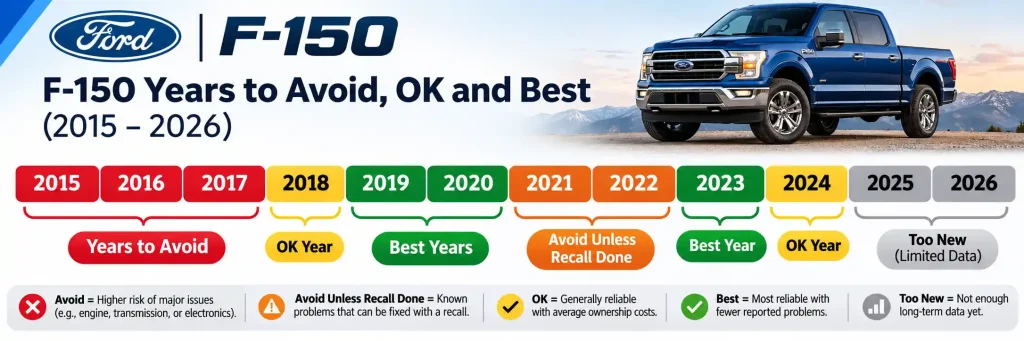
| Model year | Gen | NHTSA 2.7 engine complaints* | Verdict | What to know |
|---|---|---|---|---|
| 2015 | 1 | 14 | Avoid | First year; oil pan RTV leaks, carbon buildup |
| 2016 | 1 | 21 | Avoid | Oil pan leaks; Edge/MKX valve guide oil burning |
| 2017 | 1 | 22 | Avoid | Most complaints of any year; stalling and power-loss reports |
| 2018 | 2 | 13 | OK | Gen 2 debut; oil pan TSB 19-2189 on early builds |
| 2019 | 2 | 8 | Best | Pan fixed from late May 2019 builds |
| 2020 | 2 | 1 | Best | Fewest complaints of any year |
| 2021 | 2 | 18 | Avoid unless recall done | Intake valve recall 24V-635 (May–Oct 2021 builds) |
| 2022 | 2 | 7 | Avoid unless recall done | Recall applies to vehicles built in 2021 |
| 2023 | 2 | 3 | Best | Few complaints; check cam phaser SSM 51542 |
| 2024 | 2 | 1 | Good | Wastegate rattle TSB on early builds |
| 2025–2026 | 2 | Too new | Good | 2026 is the final F-150 year for the 2.7 |
*Complaint counts are from REREV’s analysis of NHTSA’s complaint database in October 2026, covering complaints that name the 2.7L across the F-150, Bronco, Edge, Fusion and Nautilus. They’re small raw counts, not failure rates, so treat them as a guide to patterns rather than proof.
2015 2.7 EcoBoost reliability
The launch year proved the concept but had the most teething trouble: the RTV-sealed plastic oil pan and direct-injection-only carbon buildup. Fine as a budget truck if the pan has been replaced and the service records are solid.
2016 and 2017 2.7 EcoBoost reliability
These are the peak complaint years for the Gen 1 engine. A 2016 or 2017 F-150 is still a usable truck, but expect to deal with the oil pan and carbon cleaning if they haven’t been done. Be extra careful with 2016–2017 Edge, MKX and 2017 Fusion models built in the valve guide window.
2018 2.7 EcoBoost problems and reliability
The first Gen 2 year brought port injection and the 10-speed. Its main weakness is the oil pan on trucks built before May 21, 2019. Look under the truck for a wet pan seam and ask whether bulletin 19-2189 was done. Otherwise it’s a solid buy.
2019 F-150 2.7 EcoBoost problems and reliability
The 2019 is one of the best 2.7 years. Only early builds carry the oil pan bulletin, and complaint counts are low. A well-kept 2019 is one of the safest used 2.7 trucks you can buy.
2021 Ford 2.7 EcoBoost problems
The 2021 is the year of the intake valve recall, and the first Bronco year. A 2021 built from May through October 2021 is in the recall population. With the recall done and 24N12 coverage in place, it can be a fine truck. Without proof, walk away or price in the risk.
2022 Ford 2.7 EcoBoost problems
Most 2022 trucks were built after the recall window, but early-build 2022 models produced in 2021 are included. Check the build date on the door jamb sticker and run the VIN.
2023 2.7 EcoBoost problems and reliability
The 2023 has very few engine complaints and no engine recall. The only notable item is the cam phaser cold-start rattle covered by SSM 51542. This is one of the best years to buy.
Best years for 2.7 EcoBoost
The best years for the 2.7 EcoBoost are 2019, 2020 and 2023, followed closely by 2024–2026 trucks, which are too new to judge fully but have no engine recall.
Ford 2.7 EcoBoost Life Expectancy
A well-maintained Ford 2.7 EcoBoost should reach 200,000 miles or more. Its compacted graphite iron block is the same tough material used in heavy-duty diesels, and the bottom end is rarely the weak link.
What ends most 2.7 EcoBoosts early isn’t wear but a bad batch of parts (the 2021 valves), oil starvation (low oil from an ignored leak) or neglect (overdue oil changes cooking the turbos and timing components). Avoid those three and the engine has a long life ahead of it.
2.7 EcoBoost high mileage: what to expect past 100,000 miles
Once a 2.7 EcoBoost passes 100,000 miles, these are the items most likely to need attention:
- Oil pan and valve cover leaks, especially on Gen 1 engines
- Spark plugs and ignition coils, which show up as misfires under load
- Carbon buildup on Gen 1 engines, which may need walnut blasting
- Turbo wear and wastegate rattle, plus seeping turbo oil and coolant lines
- Cam phaser or timing chain noise on cold starts
- Water pump and coolant leaks, which are normal wear items on any engine at this mileage
Buying a high-mileage 2.7 EcoBoost: checklist
- Run the VIN for recall 24V-635 and ask Ford about program 24N12 (2021–2022 builds)
- Look under the engine for a wet oil pan seam or oil on the skid plate
- Listen to a true cold start after an overnight sit; a rattle lasting a few seconds is a red flag
- Watch the tailpipe on startup for blue or white smoke
- Scan for stored misfire or cam timing codes
- Ask for oil change records; regular changes matter more than mileage on a turbo engine
- Get a pre-purchase inspection from a shop that knows EcoBoosts
2.7 EcoBoost Maintenance Tips That Prevent Problems
Most 2.7 EcoBoost problems are made worse by neglect, and the fixes below cost far less than a turbo or an engine.
Oil type, capacity and change interval
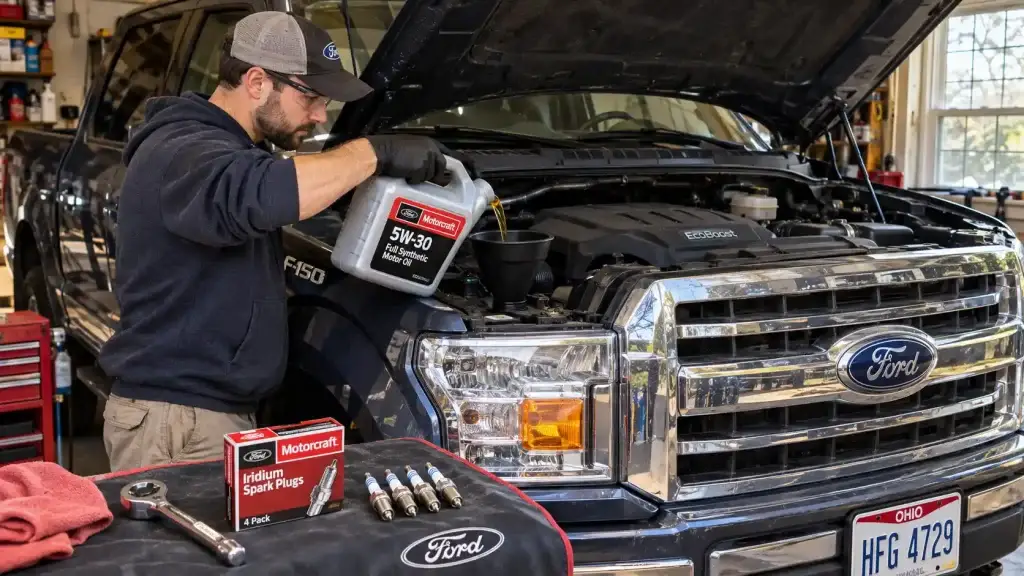
The 2.7 EcoBoost holds 6.0 quarts of oil with a filter change, and Ford specifies SAE 5W-30. The exact Ford oil specification has changed over the years, so match the spec printed in your owner’s manual or on the oil filler cap. Full synthetic is a smart choice for a turbo engine even where Ford allows a synthetic blend.
Ford’s oil-life monitor can stretch intervals to 7,500 miles or more, but towing, short trips, heat and idling all count as severe service. If that describes your driving, change the oil about every 5,000 miles. Clean oil protects the turbo bearings, the timing chain and the cam phasers, the three parts that cost the most to replace.
2.7 EcoBoost spark plugs and change interval
Ford’s schedule for recent F-150s calls for long-life plugs, and some owner’s manuals list the first change at 100,000 miles under normal driving. Many technicians and owners replace 2.7 EcoBoost spark plugs much sooner, around 50,000 to 60,000 miles, because boost wears plugs faster and a worn plug causes misfires under load. If you tow or run a tune, use the shorter interval. Always gap new plugs to the spec on your underhood emissions label.
Carbon cleaning
On a 2015–2017 engine, plan on an intake valve inspection at higher mileage and a walnut blast if carbon is heavy. A quality oil catch can slows the buildup. Gen 2 engines with port injection rarely need it.
2.7 EcoBoost premium fuel: do you need it?
No. Ford recommends 87-octane regular for the F-150’s 2.7 EcoBoost, and the engine’s knock control adjusts timing to the fuel you use. Ford does recommend premium for severe duty like towing, and the Bronco’s 330 hp rating is on premium (it’s rated 315 hp on regular). Premium buys you a little more power when you need it, not more reliability.
Other habits that help
- Let the engine idle for 30 seconds or so after hard towing before shutting it off, so the turbos can cool.
- Fix oil leaks promptly; a 2.7 that runs low on oil is a 2.7 at risk.
- Check your coolant level at every oil change.
- Run the VIN for recalls and service programs once a year.
For the full Ford-recommended service list by mileage, see our F-150 maintenance schedule. And if you do your own work, a Ford F-150 2021–2024 workshop manual gives you the factory procedures, torque specs and wiring diagrams for the later trucks, so you’re not guessing on jobs like the oil pan, plugs or coils.
2.7 EcoBoost vs 3.5 EcoBoost: Which Is More Reliable?
For most buyers, the 2.7 EcoBoost has been the more trouble-free engine. It has never had a problem as widespread as the 3.5’s cam phaser rattle on 2017–2020 trucks or its timing chain stretch on 2011–2014 trucks. The 2.7’s one serious defect, the 2021 intake valves, was confined to a roughly six-month build window in 2021 and is covered by a recall and an extended warranty.
| 2.7 EcoBoost | 3.5 EcoBoost | |
|---|---|---|
| 2026 F-150 output | 325 hp / 400 lb-ft | 400 hp / 500 lb-ft |
| Max towing (2026 F-150) | 8,400 lb | 13,500 lb |
| Combined MPG (2026, 4×2, EPA) | 21 | 20 |
| Signature problem | Oil pan leaks (2015–2019); 2021 valve recall | Cam phaser rattle (2017–2020); timing chain (2011–2014) |
| Worst years | 2015–2017, unrecalled 2021–2022 | 2011–2013, 2017–2019 |
The 3.5 is still the better tool if you tow heavy trailers every week. Working a smaller engine near its limit all the time is harder on it than letting a bigger one loaf. For commuting, light towing and everyday work, the 2.7 is the smarter, simpler choice. For the full rundown on the bigger engine, see our guide to the common 3.5 EcoBoost issues.
Has Ford Discontinued the 2.7 EcoBoost?
Yes, in the F-150. Ford’s 2027 F-150 announcement in September 2026 confirmed that a 3.0L twin-turbo EcoBoost V6 replaces the 2.7L as the standard engine. The 2026 F-150 is the last model year with the 2.7.
The new 3.0L is rated at the same 325 hp and 400 lb-ft, but Ford Authority reports it reaches peak torque lower in the rev range. Ford Authority’s sources also report that the 2027 Bronco and 2027 Ranger are dropping the 2.7 for the 3.0L, though Ford hadn’t officially confirmed those two as of this writing. For the rest of the 2027 lineup, see our breakdown of the 3.0L EcoBoost and V8 changes for 2027.
What it means for owners: nothing bad. Both engines are part of Ford’s Nano family, and a huge number of 2.7-powered trucks and SUVs are on the road, so parts and service know-how will be around for many years. If anything, a well-kept 2019–2026 truck with the 2.7 is a proven quantity, while the 3.0L in the F-150 is brand new.
2.7 EcoBoost FAQs
Is there a recall on 2.7 EcoBoost engines?
Yes. NHTSA recall 24V-635 (Ford recall 24S55) covers 90,736 2021–2022 Ford and Lincoln vehicles with 2.7L or 3.0L Nano EcoBoost engines built between May and October 2021, including the F-150, Bronco, Edge and Nautilus. Intake valves can break and cause engine failure. Dealers run an engine cycle test and replace the engine free if it fails, and program 24N12 adds 10-year/150,000-mile coverage for a later valve failure.
Does the 2.7 EcoBoost require premium fuel?
No. Ford recommends 87-octane regular gasoline for the 2.7 EcoBoost. Premium is recommended for severe duty like towing and gives a little more power, and the Bronco’s 330 hp rating is achieved on premium fuel.
What are some common engine problems with a Ford F-150 EcoBoost engine?
On the F-150 2.7 EcoBoost, the common problems are oil pan leaks (2015–2019), carbon buildup on 2015–2017 engines, spark plug and coil misfires, cam phaser rattle on cold starts and the 2021–2022 intake valve recall. On the 3.5 EcoBoost, the big ones are cam phaser rattle (2017–2020) and timing chain stretch (2011–2014).
Is the 2.7L EcoBoost a reliable motor?
Yes. The 2.7L EcoBoost is a reliable motor with good maintenance, and most examples should pass 200,000 miles. Choose a 2019, 2020 or 2023, or any year with its oil pan and recall work documented.
Is the 2.7 EcoBoost a good engine?
Yes. It delivers 325 hp and 400 lb-ft, about 21 mpg combined in a 2026 F-150 4×2 and up to 8,400 lb of towing. It’s a strong all-around engine for daily driving and moderate towing.
Is the 2.7 EcoBoost twin turbo?
Yes. The 2.7 EcoBoost is a twin-turbocharged V6, with one turbocharger feeding each bank of three cylinders.
How long will a 2.7 EcoBoost last?
A well-maintained 2.7 EcoBoost should last 200,000 miles or more. Changing the oil about every 5,000 miles under severe use and fixing leaks early are the biggest factors.
How much does it cost to replace a turbo on a 2.7 EcoBoost?
Replacing one turbo on a 2.7 EcoBoost typically costs $1,200 to $2,500 with parts and labor. Replacing both at a shop can run $2,000 to $5,000.
Is the 2.7 EcoBoost more reliable than the 3.5?
Generally, yes. The 2.7 has had fewer widespread problems than the 3.5. The 3.5 is the better choice for frequent heavy towing.