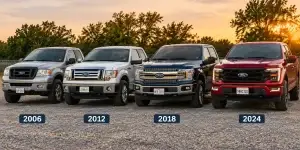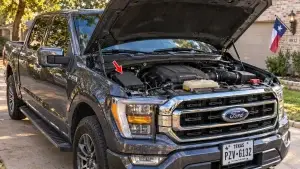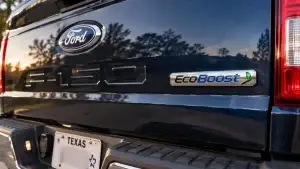

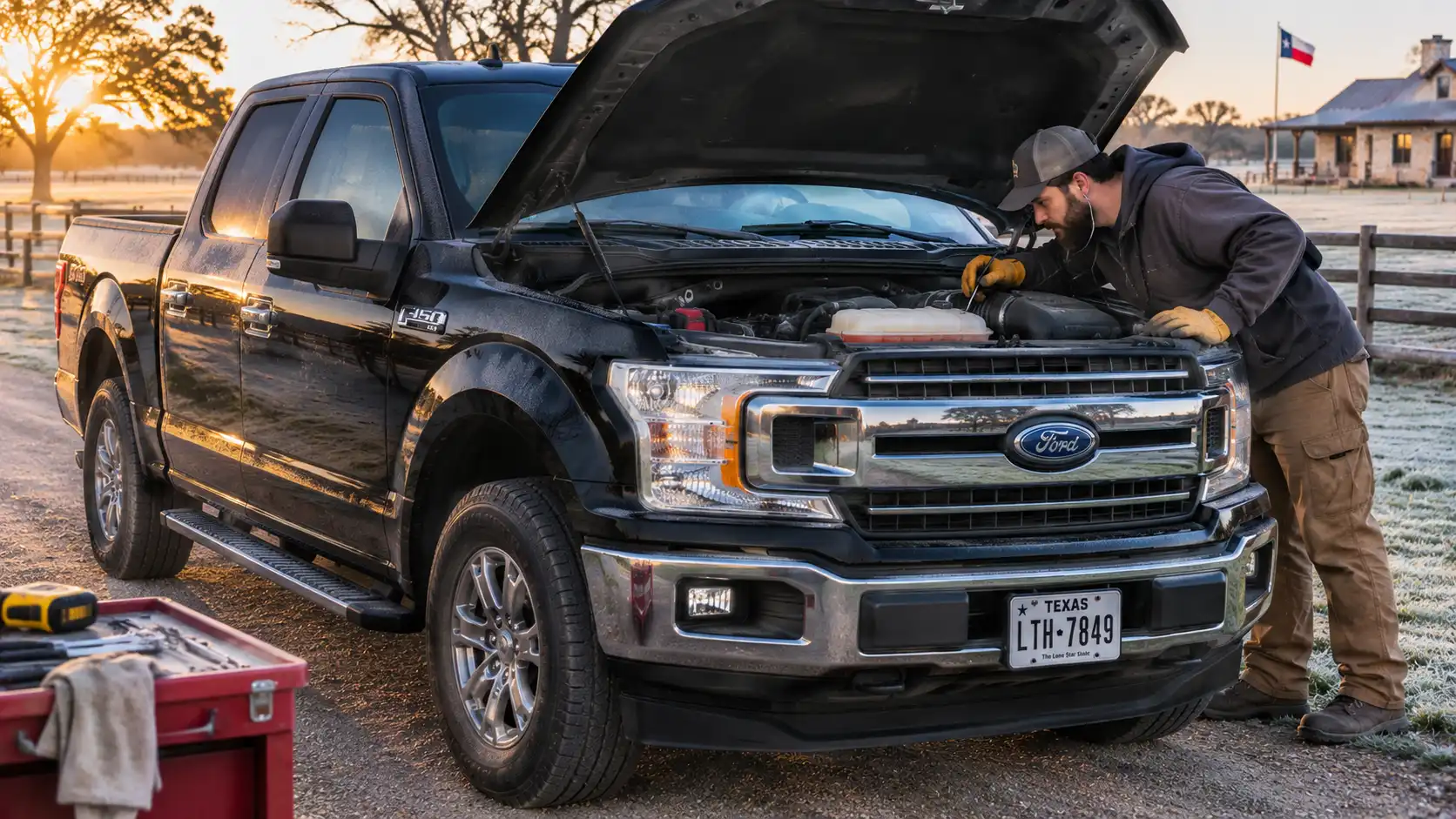
You fire up your F-150 on a cool morning, and for two or three seconds the engine sounds like someone shook a coffee can full of bolts. Then it goes quiet and drives fine. If that sounds familiar, you’ve met the most talked-about of the 3.5 EcoBoost problems, and you’re far from alone.
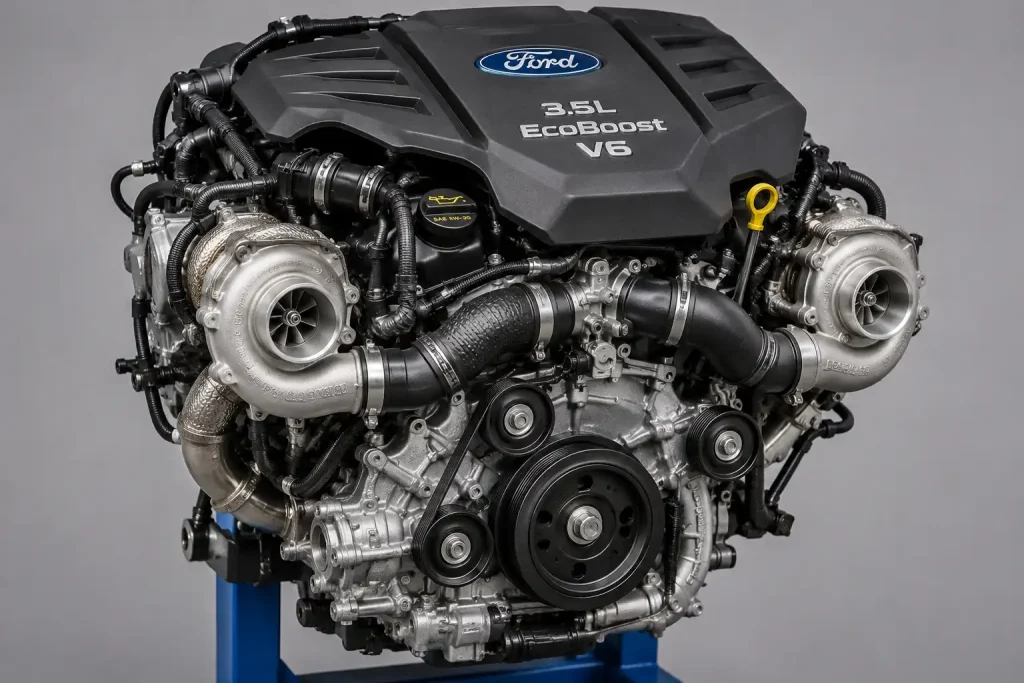
Ford’s twin-turbo 3.5L V6 has been the F-150’s best-selling engine for more than a decade. It tows like a V8, makes huge low-end torque, and plenty of well-kept examples run well past 150,000 miles. It also has a short list of well-documented weak spots, and which ones you face depends almost entirely on your model year.
This guide breaks down every common issue by generation, with symptoms, causes, fixes and what each repair costs today. It also covers the exact years to avoid, the best years to buy, and the Ford bulletins and programs that apply to your truck.
Quick answer: The most common 3.5 EcoBoost problems are cam phaser rattle on 2017–2020 engines, timing chain stretch on 2011–2014 F-150s, intercooler condensation misfires on 2011–2013 trucks, intake valve carbon buildup on direct-injection-only first-gen engines, and turbo oil line, coolant and oil leaks at higher mileage. The worst years are 2011–2013 and 2017–2019. Among years with enough time on the road to judge, the 2021–2023 engines have the fewest engine complaints on record with NHTSA.
Engines covered: F-150 (2011–present), F-150 Raptor, Expedition and Lincoln Navigator (2015–present), plus notes on the transverse version in the Explorer Sport, Flex, Taurus SHO and Lincoln MKS/MKT.
3.5 EcoBoost Generations at a Glance
Ford has built three versions of the truck 3.5 EcoBoost, and each one fixed the last one’s biggest flaw while adding a new quirk of its own. Knowing which generation you have is the first step in diagnosing any problem.
| Generation | F-150 years | F-150 output | What changed | Signature weak spot |
|---|---|---|---|---|
| Gen 1 | 2011–2016 | 365 hp / 420 lb-ft | Direct injection only, twin turbos, 6R80 6-speed | Timing chain stretch, intercooler condensation, intake valve carbon |
| Gen 2 | 2017–2020 | 375 hp / 470 lb-ft (Raptor 450 / 510) | Added port injection, new turbos, stronger timing chains, 10R80 10-speed | Cam phaser rattle |
| Gen 3 | 2021–present | 400 hp / 500 lb-ft (PowerBoost 430 / 570) | Updated cam phasers and heads, PowerBoost hybrid option | Fewest complaints; 2024–2025 cup plug oil leak recall |
The Expedition and Navigator switched to the 3.5 EcoBoost for 2015, so a 2015–2017 Expedition runs the Gen 1 engine, and the redesigned 2018-on SUVs share the Gen 2 and later engines with the F-150. Gen 1 also powered transverse, front-drive-based models like the Explorer Sport, Flex and Taurus SHO, which have their own issues noted below.
Not sure where your truck sits in Ford’s lineup history? Our guide to the Ford F-Series generations lays out every body style and engine change by year.
1st Gen 3.5 EcoBoost Problems (2011–2016)
The first-generation engine was a bold move in 2011: a twin-turbo V6 in America’s best-selling pickup. Most of its problems trace back to two things, direct injection without port injection and a timing drive that didn’t hold up well to long oil change intervals.
Intercooler condensation misfire (2011–2013)
Symptoms: The truck stumbles, shudders or briefly loses power when you floor it, usually after steady highway cruising on a humid or rainy day. Sometimes the check engine light flashes. It feels like the engine hiccuped and then recovered.
Cause: The front-mounted intercooler (charge air cooler) cools the boosted air so well that moisture condenses inside it. When you suddenly demand full boost, that pooled water gets sucked into the engine, and the cylinders misfire.
Fix: NHTSA investigated about 360,000 2011–2013 F-150s for this but closed the case without a recall after Ford released service bulletins. The final fix combined a PCM software update with a revised intercooler that has an air deflector to help clear the moisture. If your truck still stumbles, ask a dealer to confirm the bulletin work was done.
Cost: Often handled under the bulletins when the trucks were newer. Out of pocket, expect roughly $500 for the update and revised cooler at an independent shop.
Timing chain stretch and cold-start rattle (2011–2015)
Symptoms: A rattle from the front of the engine for 2–5 seconds on the first start after the truck sits for six hours or more. Over time you may see a check engine light with code P0016 or P0017 (cam/crank correlation), rough running and reduced power.
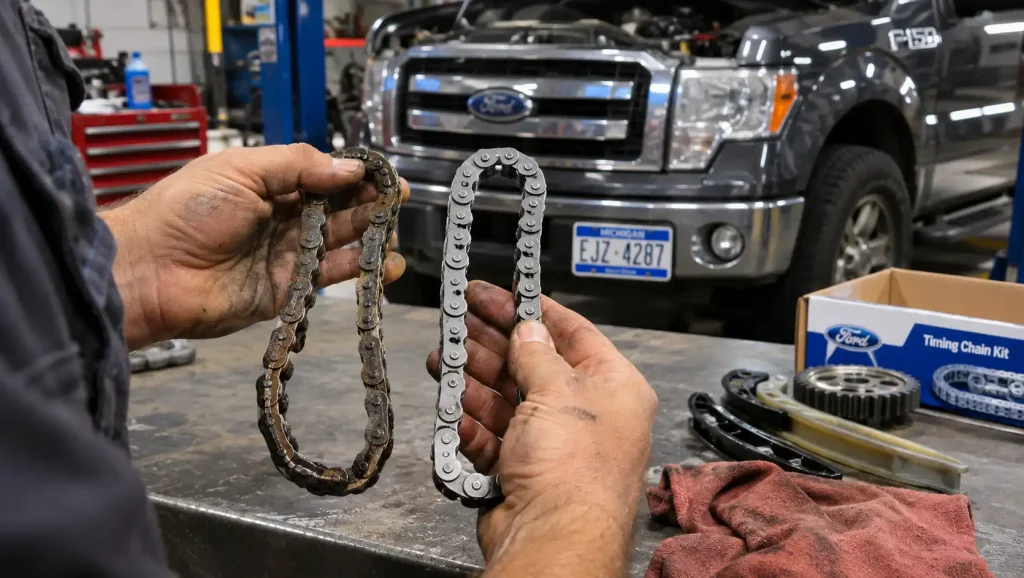
Cause: On Gen 1 engines the primary timing chain wears and lengthens. That throws off the relationship between the crankshaft and camshafts. Long oil change intervals make it worse, because worn oil speeds chain and guide wear. Ford addressed the condition in bulletin 17-0026 (2011–2014 F-150s with P0016 from a worn primary chain) and later bulletin 18-2305 (2011–2015 F-150s with the cold-start front cover rattle).
Fix: Don’t just swap a chain. The right repair replaces the primary and secondary chains, guides, tensioners and usually the cam phasers together, so you only pay for the 10-hour teardown once. The 3.5 EcoBoost is an interference engine, so a chain that jumps a tooth can bend valves.
3.5 EcoBoost timing chain replacement cost
Labor guides put a full timing job on these engines at roughly 10 hours. At most independent shops a complete Gen 1 timing set lands between about $1,500 and $3,500. Dealer quotes run higher, and adding cam phasers and a water pump pushes the total up. Parts alone are a small share of the bill; you’re mostly paying for labor.
Intake valve carbon buildup (Gen 1 only)
Symptoms: Rough cold idle, light-throttle stumble, misfire codes and a slow fade in power and fuel economy as the miles add up.
Cause: With direct injection, fuel sprays straight into the cylinder and never washes over the backs of the intake valves. Oil vapor from the crankcase ventilation system bakes onto those valves and builds into hard carbon. Gen 2 and later engines added port injectors, which largely solves it.
Fix: Walnut-shell blasting, which removes the intake and blasts each port clean. Professional walnut blasting typically costs $400 to $1,200 depending on the shop. A quality oil catch can slows the buildup but won’t eliminate it.
Turbo oil feed line and coolant line leaks
Symptoms: Oil residue or wetness on the bottom of a turbo, burning oil smell after a drive, drips on the driveway, or a slowly dropping coolant level with no obvious puddle.
Cause: The turbos are fed by small oil supply and return lines and cooled by coolant lines that live in extreme heat. Over time the fittings, crush washers and braided sections harden and seep. On the transverse 3.5 EcoBoost (2016 Taurus, 2016–2017 Flex and MKT, 2017 Explorer) Ford issued recall 16V-925 because improperly brazed turbo oil supply tubes could leak oil onto hot engine parts.
Fix and cost: The lines themselves are cheap, roughly $85 to $95 each for aftermarket replacements. The labor isn’t. Some lines can’t come out without pulling the turbo, which is why owners report shop quotes of $1,000 to $2,000 for a turbo oil feed line replacement or turbo coolant line job. If you’re already in there for one line, replace its partners and the crush washers.
Turbo wear and wastegate rattle
Symptoms: Slow spool, a metallic rattle on deceleration or at idle, whistling, blue smoke or a low-boost code.
Cause: Hot shutdowns, overdue oil changes and simple age wear the turbo bearings and wastegate linkage. Gen 1 trucks see this most at high mileage.
Fix and cost: Replace the affected turbo with a quality unit and replace its oil and coolant lines at the same time. A single turbo replacement typically runs $1,200 to $2,500 installed.
Spark plugs and ignition coils
Boosted engines are hard on ignition parts. Worn plugs or a weak coil show up as a misfire under heavy load, especially when towing. Fix any intercooler or boost leak issue first, then replace plugs with the correctly gapped Motorcraft part and test the coils. It’s an inexpensive fix, but it’s often misdiagnosed as something worse.
2nd Gen 3.5 EcoBoost Problems (2017–2020)
For 2017, Ford reworked the engine with port and direct injection, new turbos with lighter turbine wheels and beefier timing chains. Carbon buildup and chain stretch faded, but a new problem took their place. In NHTSA’s complaint data, the cam phaser rattle on these engines is the single biggest 3.5 EcoBoost complaint of any generation.
3.5 EcoBoost cam phaser rattle
Symptoms:
- A loud rattle or clatter from the top front of the engine for 2–5 seconds after a cold start, once the truck has sat six hours or more
- In some trucks, a knock or tick at warm idle
- The auto start-stop system sometimes fails to restart the engine, with or without code P164C
- Cam timing codes in advanced cases
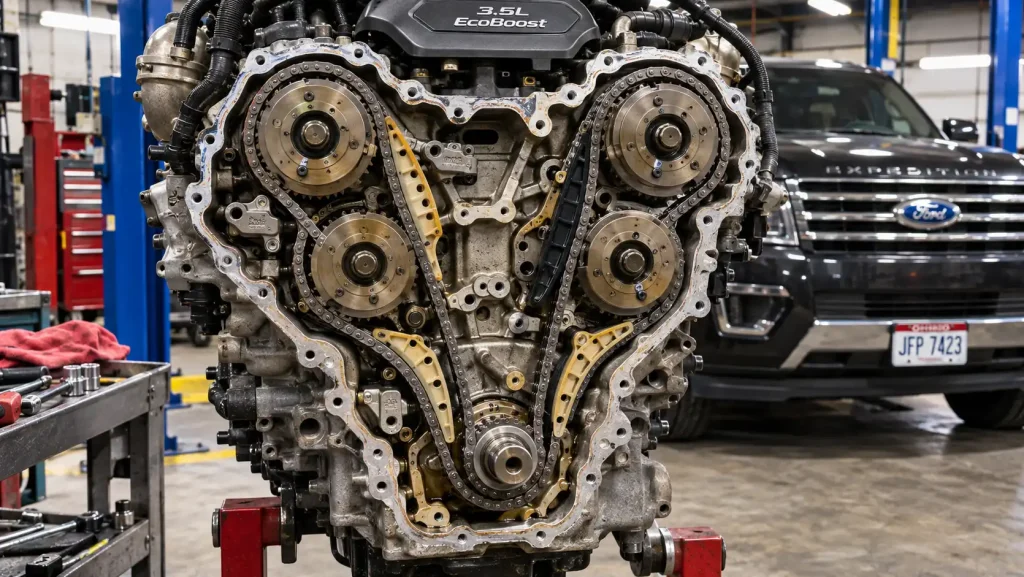
Cause: Cam phasers (Ford calls them variable camshaft timing, or VCT, units) use oil pressure to advance or retard each camshaft. A locking pin holds each phaser in place at startup until oil pressure builds. On these engines the phasers wear, the pin doesn’t hold, and the phaser rotor slaps around inside its housing until oil pressure catches up. That’s the rattle.
What Ford did: Ford tried three things over three years.
- Program 21B10 (2021): A free PCM reflash meant to reduce how many trucks develop the rattle. It covered certain 2017–2020 F-150s and was later extended to 2018–2020 Expeditions and Navigators.
- Program 21N03 (2021): Extended warranty coverage to replace all four cam phasers on qualifying 2017–2020 F-150s, prorated by mileage: 100% up to 69,999 miles, dropping to 0% at 90,000 miles. You had to have the 21B10 reflash done first. This coverage has expired; Ford’s final program supplement ended it on January 1, 2023.
- TSB 23-2143 (May 2023): The current repair procedure. For 2017–2020 F-150s and 2018–2020 Expeditions and Navigators built on or before November 30, 2019, technicians replace all four VCT units with updated parts. You can read Ford’s TSB 23-2143 yourself; note that a TSB is a repair procedure, not free coverage.
If your truck was built after November 30, 2019, it already left the factory with the production fix.
3.5 EcoBoost cam phaser replacement cost
Ford’s own labor time for replacing all four phasers is 9.6 hours on an F-150, 9.7 on a Raptor and 9.8 on an Expedition or Navigator. That labor is why the bill climbs fast.
| Repair scope | Typical cost (2026) | When it makes sense |
|---|---|---|
| Four cam phasers only (per TSB 23-2143) | $2,500–$4,500 | Low-mileage truck, chains and guides within spec |
| Phasers + timing chains, guides, tensioners, solenoids | $4,500–$6,300 | Over about 80,000 miles, or any chain noise |
| Full “while you’re in there” job (adds water pump, valve covers, thermostat housing, one-piece oil pan) | About $6,000–$6,500+ | Keeping the truck long-term |
A complete OEM cam phaser and timing chain kit for 2017–2020 trucks sells for about $1,600 on its own, so labor makes up most of any quote. One well-known Ford technician calls the full Gen 2 refresh the “$6,000 tune-up,” and owners have reported dealer quotes near $6,500 for the combined phaser and timing job on an Expedition.
Can you keep driving it? Ford states the rattle itself doesn’t affect safety, performance or emissions. But a phaser that keeps getting louder puts extra stress on the chains, and a timing failure turns a $4,000 repair into a five-figure engine replacement. Don’t ignore a rattle that grows.
2017 3.5 EcoBoost problems
The 2017 was the first year of the Gen 2 engine and the 10-speed automatic, and it’s the start of the cam phaser story. An independent count of NHTSA’s complaint file finds 120 engine complaints for 2017 3.5 EcoBoost vehicles. Beyond phasers, early trucks drew complaints about harsh or hunting 10R80 shifts, which are transmission strategy and calibration issues, not engine faults.
2018 3.5 EcoBoost problems
The 2018 model year has the most engine complaints of any 3.5 EcoBoost year in NHTSA’s database, 193 as of October 2026, and 124 of them mention cam phasers, timing or a rattle. Many come from the redesigned 2018 Ford Expedition, which shares the engine. 2018 also had two engine recalls specific to the 3.5L:
- 17V-672: a small number of 2018 F-150s whose cylinder heads may have been machined without oil supply holes for the camshaft journals
- 18V-392: 2018 F-150, Expedition and Navigator high-pressure fuel pump welds that could crack and leak oil or fuel
Is the 2018 3.5 EcoBoost a good engine?
Yes, if the phaser work is done. A 2018 with documented TSB 23-2143 or 21N03 phaser replacement, completed recalls and regular oil changes is a strong engine with 375 hp and 470 lb-ft. A 2018 that still rattles on a cold start is a $2,500 to $6,000 bill waiting to happen, so price it accordingly.
2019 3.5 EcoBoost problems
The 2019 is close behind, with 183 NHTSA engine complaints and 125 that mention phasers, timing or rattle. Ford also issued bulletin 20-2132 for excessive oil consumption on 2017–2019 F-150s and 2018–2019 Expeditions built before April 1, 2019. The cause was traced to the crankcase ventilation system, and the fix was new valve covers.
Oil leaks and coolant leaks (all Gen 2)
Technicians who see a lot of these engines report a familiar list of leakers on 2017–2020 trucks: water pumps, thermostat housings and their O-rings, cracked valve covers, molded coolant hoses and the early two-piece oil pan. None of these are dramatic on their own, but most sit near the timing cover. If you’re paying for a phaser job, it’s the cheapest time to replace them.
2020 3.5 EcoBoost
Complaints fall sharply for 2020, to 61, and only 7 mention timing or rattle. Trucks built after November 30, 2019 got the production phaser fix. A late-build 2020 is the safest Gen 2 truck to buy.
3rd Gen 3.5 EcoBoost Problems (2021–Present)
The 14th-generation F-150 bumped the 3.5 EcoBoost to 400 hp and 500 lb-ft, and the same engine anchors the PowerBoost hybrid (430 hp, 570 lb-ft combined) and the 450-hp High-Output version in the Raptor. Ford also updated the cylinder heads and cam phasers, and the redesigned phasers are the same parts technicians now install to fix Gen 2 trucks.
So far the results look good. In the same NHTSA complaint analysis, the 2021 has 66 engine complaints and none about cam phasers, while the 2022 has 14 and the 2023 has 11. Newer trucks have had less time to rack up complaints, but that’s still a dramatic drop.
2021 3.5 EcoBoost problems
Most 2021 issues are minor and covered by bulletins rather than recalls:
- Misfires: Ford special service message SSM 50412 covers some 2021–2022 F-150s with the 3.5 EcoBoost that show misfire concerns, with or without trouble codes.
- Startup rattle from the bellhousing: a bulletin covers some 2021–2023 F-150s and 2023–2024 Expeditions and Navigators with a rattle or scraping noise from the bellhousing area on startup. This is not the cam phaser problem; it comes from where the engine meets the transmission.
- PowerBoost hybrid quirks: bulletins cover coolant loss, a wrench light with code P084B and catalyst codes on some 2021–2023 PowerBoost trucks. These are mostly software and hybrid-system issues, not core engine failures.
2023 3.5 EcoBoost problems
The 2023 is one of the cleanest years on record. The one notable item is a Ford program that replaces the right-hand turbocharger on certain 2023 F-150, Expedition and Navigator models with the 3.5L. If you’re buying a 2023, ask a dealer to run the VIN for open programs.
One point of confusion worth clearing up: the big 2024 recall for broken intake valves (24V-635) covers 2021–2022 F-150s with the 2.7L EcoBoost and other vehicles with the 3.0L, not the 3.5L.
2024–2025 cup plug oil leak recall
Ford recalled certain 2024–2025 F-150s, 2024–2025 Expeditions and 2024 Navigators with the 3.5L because an engine cup plug may be misaligned and cause a rapid oil leak. A fast oil loss can stall the engine, which raises crash risk. The campaigns are NHTSA 24V-851 and 25V-198; Ford’s number for the second one is 25S30. If you see fresh oil under the engine or get a low oil pressure warning on one of these trucks, stop driving and call a dealer.
3.5 EcoBoost Years to Avoid (and the Best Years to Buy)
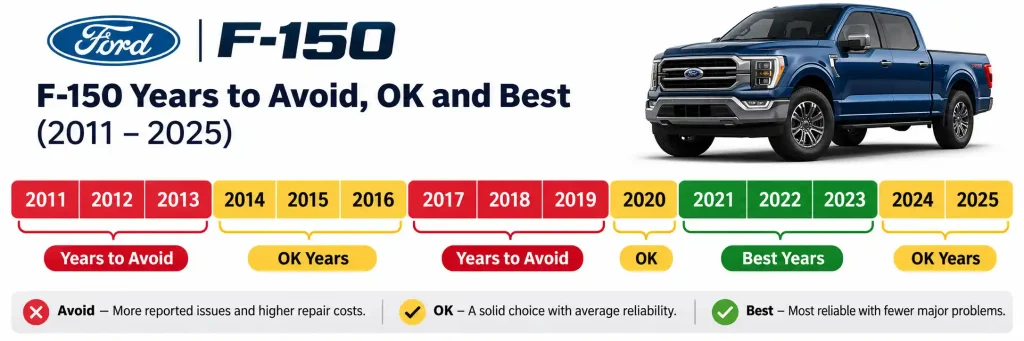
The 3.5 EcoBoost years to avoid are 2011–2013 and 2017–2019. The best years are 2021–2023, with a late-build 2020 and the 2014 as the strongest picks in their generations.
| Model year | Gen | NHTSA engine complaints* | Verdict | Main concern |
|---|---|---|---|---|
| 2011 | 1 | 166 | Avoid | Intercooler misfires, stalling, timing chain |
| 2012 | 1 | 171 | Avoid | Most stumble and power-loss complaints of any year |
| 2013 | 1 | 137 | Avoid | Timing chain stretch (TSB 17-0026) |
| 2014 | 1 | 47 | Good | Best Gen 1 year; check chain and carbon |
| 2015 | 1 | 85 | OK | First Expedition year; block heater recall on F-150 |
| 2016 | 1 | 115 | OK | Turbo oil tube recall on the cars, not the F-150 |
| 2017 | 2 | 120 | Avoid | Cam phaser rattle begins; first-year 10R80 |
| 2018 | 2 | 193 | Avoid | Most complaints of any year; 2 engine recalls |
| 2019 | 2 | 183 | Avoid | Cam phasers; oil consumption bulletin |
| 2020 | 2 | 61 | OK | Late builds (after Nov 30, 2019) have the phaser fix |
| 2021 | 3 | 66 | Best | No cam phaser complaints; minor misfire bulletin |
| 2022 | 3 | 14 | Best | Very few complaints |
| 2023 | 3 | 11 | Best | Check for the RH turbo program |
| 2024 | 3 | 9 | Caution | Cup plug oil leak recall |
| 2025 | 3 | 4 | Too new | Cup plug oil leak recall |
*Counts include the F-150, Expedition, Navigator and the 3.5 EcoBoost cars and crossovers, from REREV’s analysis of NHTSA’s complaint file in October 2026. They’re raw totals, not rates per vehicle sold, so they partly reflect how many trucks are on the road.
Which 3.5 EcoBoost years should you avoid?
2011–2013: The first F-150 years combine intercooler condensation stumbles, timing chain stretch and heavy carbon buildup. Many have had the fixes by now, but you’re buying a 10-plus-year-old direct-injection engine with known chain issues. Only buy one with records of timing chain work.
2017–2019: These trucks and SUVs are the heart of the cam phaser problem. They’re good engines once the phasers are replaced, so the advice is “avoid unless repaired,” not “avoid at all costs.” Ask for the repair order showing all four VCT units were replaced.
Best 3.5 EcoBoost years
2021, 2022 and 2023 are the best 3.5 EcoBoost years. They come after the phaser build window, have the lowest complaint counts and have no engine recalls. If your budget points to an older truck, a late-build 2020 (built after November 30, 2019) or a 2014 with documented timing chain service is the next-best choice.
Is the 3.5 EcoBoost Reliable?
Yes. The Ford 3.5 EcoBoost is a reliable engine when you pick the right year and keep up with oil changes. Its problems are well documented, predictable and fixable, and none of the common ones is a design flaw that destroys engines across the board. The catch is that the fixes are labor-heavy, so the cost of ownership depends on buying a truck that already has them.
Here’s how 3.5 EcoBoost reliability stacks up by generation:
- Gen 1 (2011–2016): Average. Strong bottom end, but chains, carbon and early intercooler issues add up. Best bought with records.
- Gen 2 (2017–2020): Good once the cam phasers are replaced. Port injection solved carbon, and the timing chains are tougher.
- Gen 3 (2021–present): The best so far, based on complaint data and the lack of engine recalls through 2023.
If you’re weighing a 3.5 EcoBoost against Ford’s V8, the trade-off is torque and towing versus simplicity. Ford is also shaking up the lineup, so it’s worth reading about the new engine and V8 options coming for 2027 before you buy new.
Ford 3.5 EcoBoost life expectancy
A well-maintained 3.5 EcoBoost commonly lasts 200,000 to 250,000 miles, and high-mileage fleet and work trucks show the bottom end can go further. The engine itself rarely wears out first. What usually ends a 3.5 EcoBoost’s life is an expensive repair landing on an older, cheaper truck: a timing job, a pair of turbos or a neglected cooling system.
Three habits make the biggest difference in how long a 3.5 EcoBoost lasts:
- Short oil change intervals. Most owners drive in Ford’s “severe” conditions (towing, short trips, idling, heat), and the oil life monitor often calls for a change between roughly 5,000 and 7,500 miles. Sticking to the low end protects chains, phasers and turbo bearings.
- Fix rattles early. A cam phaser or chain rattle that’s ignored can damage the rest of the timing system.
- Treat the turbos kindly. Let the engine idle briefly after hard towing before shutting it off, and never skip the oil change.
High mileage 3.5 EcoBoost problems
Past 100,000 miles, expect some of these on any generation:
- Timing chain stretch and guide wear (Gen 1 most of all)
- Turbo bearing wear, wastegate rattle and turbo oil or coolant line seepage
- Oil leaks from valve covers, the oil pan and front cover
- Water pump and thermostat housing leaks
- Cracked exhaust manifolds or broken manifold studs, which cause a cold-start tick and slow spool
- Carbon buildup on Gen 1 engines
- Worn spark plugs and coils showing up as misfires under load
On the transverse 3.5 EcoBoost in the Explorer, Flex and Taurus SHO, the water pump sits inside the engine and is driven by the timing chain, so a leaking seal can dump coolant into the oil. Truck engines use an externally mounted pump, which is easier to spot and less catastrophic when it leaks.
Buying a used 3.5 EcoBoost: a quick checklist
- Run the VIN through the NHTSA recall lookup and ask a Ford dealer to check programs 21B10 and 21N03 and TSB 23-2143
- Ask for repair orders showing timing chain (Gen 1) or cam phaser (Gen 2) work
- Listen to a true cold start after the truck has sat overnight; any rattle in the first few seconds is a red flag
- Scan for stored codes like P0016, P0017 or misfire codes
- Look under the engine and around the turbos for fresh oil and dried coolant
- Ask how often the owner changed the oil; an EcoBoost with 10,000-mile intervals is a gamble
- Get a pre-purchase inspection from a shop that knows EcoBoosts
How to Prevent 3.5 EcoBoost Problems
Most 3.5 EcoBoost failures are made worse by neglect, and a few cost nothing to prevent. This maintenance plan covers every generation.
| Task | Interval | Why it matters on the 3.5 EcoBoost |
|---|---|---|
| Full synthetic 5W-30 oil and filter | About every 5,000 miles, sooner when towing | Protects timing chains, cam phasers and turbo bearings |
| Listen to a cold start | Every week | Catches phaser or chain rattle before it causes damage |
| Spark plugs (correct gap) | At Ford’s interval, sooner if towing or tuned | Prevents misfires under boost |
| Air filter | Each oil change check | Turbos are sensitive to dirty intake air |
| Coolant level and leak check | Each oil change | Spots water pump, thermostat housing and turbo line leaks early |
| Intake valve inspection (Gen 1 only) | At higher mileage or when misfires start | Carbon buildup on direct-injection-only engines |
| Recall and program check | Once a year | New recalls and bulletins keep appearing |
For the full Ford-recommended service list by mileage, see our F-150 maintenance schedule. To check your own VIN for open safety recalls, use the free NHTSA recall lookup; it covers all 3.5 EcoBoost recall campaigns, including the 2024–2025 cup plug recall.
Doing the work yourself
Plenty of 3.5 EcoBoost jobs are DIY-friendly: plugs, coils, oil changes, intake cleaning and even some turbo line replacements. The timing and cam phaser jobs are not beginner work. They require cam alignment tools, exact torque specs and one-time-use bolts, and a mistake on an interference engine can cost you the engine.
If you do tackle a bigger job, work from the factory procedures, not a video alone. A Ford F-150 2015–2020 workshop manual covers the 2015–2020 trucks, including the Gen 2 3.5 EcoBoost, with step-by-step repair procedures, torque specs and wiring diagrams.
3.5 EcoBoost Problems: Frequently Asked Questions
Is the 3.5L V6 EcoBoost reliable?
Yes. The 3.5L V6 EcoBoost is reliable overall, especially 2021 and newer engines. Its known problems are cam phaser rattle on 2017–2020 engines and timing chain stretch, intercooler condensation and carbon buildup on 2011–2016 engines. Choose a later year, or an earlier one with the fixes documented, and change the oil about every 5,000 miles.
Is the 2013 Ford F-150 with a 3.5 EcoBoost engine reliable?
A 2013 F-150 3.5 EcoBoost can be reliable, but it’s one of the riskier years. It’s affected by Ford’s timing chain bulletin 17-0026, early intercooler condensation issues and carbon buildup from direct injection. Buy one only with records of timing chain service and regular oil changes, and listen for a rattle on a cold start.
How long will a Ford EcoBoost last?
A well-maintained Ford 3.5 EcoBoost commonly lasts 200,000 to 250,000 miles. Frequent oil changes, fixing timing rattles early and caring for the turbos are what get it there. Neglected oil changes shorten its life more than anything else.
What are the common problems with the 2019 Ford EcoBoost engine?
The most common 2019 3.5 EcoBoost problem is cam phaser rattle on cold starts, fixed by replacing all four cam phasers under TSB 23-2143. Some 2019 trucks also had excessive oil consumption, fixed with new valve covers under bulletin 20-2132, plus leaks from the water pump, thermostat housing and oil pan.
Is cam phaser replacement still covered by Ford?
Not under the special program. Ford’s 21N03 extended coverage ended on January 1, 2023. Trucks still under factory powertrain warranty (5 years or 60,000 miles) or a Ford Extended Service Plan may be covered, and some owners have received goodwill help from dealers. Ask your dealer to check the VIN.
How much does it cost to replace cam phasers on a 3.5 EcoBoost?
Replacing all four cam phasers on a 3.5 EcoBoost typically costs $2,500 to $4,500. Adding timing chains, guides and tensioners raises it to about $4,500 to $6,300, and a full refresh with the water pump and gaskets can pass $6,000.
What are the 3.5 EcoBoost years to avoid?
Avoid 2011–2013 and 2017–2019 3.5 EcoBoost engines unless the timing chain (2011–2013) or cam phaser (2017–2019) repairs are documented. The best years are 2021, 2022 and 2023.