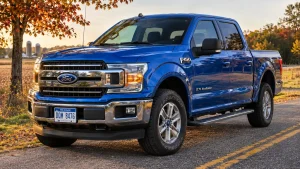

Is the Ford Explorer reliable? It depends heavily on the year. The Explorer has been one of America’s best-selling SUVs since 1991, but its record swings between some of the cleanest years of any midsize SUV and some genuinely troubled ones. The difference often comes down to a single engine part or a launch-year recall.
This guide ranks the best Ford Explorer years and the years to avoid, using NHTSA complaint counts, recall records and what the biggest sources say, including where they disagree. Then it covers each engine, the Explorer ST, and a checklist for buying used.
Quick answer: The best years for Ford Explorer are 2009–2010 (especially with the V8), 2018–2019 and 2022–2023. The Ford Explorer years to avoid are 2002–2005 (transmission problems), 2011, 2013 and 2016 (internal water pump, exhaust odor complaints and high complaint counts) and 2020 (the redesign year, with dozens of recalls). On any 2011–2019 V6 Explorer, check water pump history before you buy.
Best and Worst Ford Explorer Years: What the Top Sources Say
No two sources agree completely. Here’s where they line up, where they clash, and what NHTSA’s complaint records show.
| Model year | Google AI Overview* | Autotrader (Oct 2026) | Dealers | Owner forums** | NHTSA complaints*** | Our verdict |
|---|---|---|---|---|---|---|
| 2002–2005 | Caution | Avoid 2004 | — | — | High (2002–2003 worst per CarGurus) | Avoid |
| 2006–2008 | V6 caution | Recommended generation; avoid 2008 | — | 2008 with V8 | 147 (2008) | Good (V8) |
| 2009–2010 | Best (V8) | Best | Planet Ford: 2010 | 2009–2010 with V8 | 33 / 115 | Best |
| 2011 | Caution | Avoid | Planet Ford: recommended | — | 1,191 | Avoid |
| 2012 | — | Good value | Planet Ford: recommended | — | 820 | Good (with records) |
| 2013 | Caution | Good value | — | 2013–2015 (one thread) | 2,222 | Avoid |
| 2014–2015 | — | Good value | — | 2013–2015 (one thread) | 1,669 / 1,748 | Caution |
| 2016 | — | Avoid | Crossroads: avoid | — | 2,424 (highest) | Avoid |
| 2017 | — | — | Crossroads: ideal range | — | 1,666 | Caution |
| 2018–2019 | Best | — | Planet Ford: 2019 | — | 705 / 281 | Best |
| 2020 | Caution | Avoid (23 recalls) | — | — | 1,153 | Avoid |
| 2021 | Caution | — | Pennyrile: 2021–2023 | — | 393 | Good (recalls done) |
| 2022 | — | — | Pennyrile: strongest | Reddit: 2022.5+ police 3.3L | 242 | Best |
| 2023 | Best | Best of current gen | Pennyrile: 2021–2023 | — | 99 | Best |
| 2024 | — | — | Crossroads: 2024 | — | 19 | Good |
| 2025–2026 | 2026 best | — | Crossroads: 2025 | — | 87 (2025) | Good (too new to judge) |
*Google’s AI Overview changes often. This column reflects the November 2026 snapshot. **Explorer Forums and Reddit r/FordExplorer views, as summarized at time of writing; individual threads vary. ***Raw NHTSA owner complaints per model year (CarWhere’s count of NHTSA data, November 2026). These aren’t adjusted for sales volume, and newer years have had less time to collect complaints.
Pennyrile Ford’s picks are as reported in search summaries; we couldn’t open its page to confirm them.
The pattern is consistent: the last years of each generation are the safest, and the first years after a redesign (2002, 2011, 2020) are the riskiest. The biggest disagreements are over 2008, 2011 and 2017. Each is explained below.
Ford Explorer Generations at a Glance
The Explorer has run through six generations since 1991. The biggest change came in 2011, when it switched from a truck-style body-on-frame design to a car-like unibody crossover. It moved back to a rear-wheel-drive-based platform in 2020.
| Generation | Years | Body / layout | Main engines | Transmissions |
|---|---|---|---|---|
| 1st | 1991–1994 | Body-on-frame (Ranger-based) | 4.0L V6 | 5-speed manual, 4-speed auto |
| 2nd | 1995–2001 | Body-on-frame | 4.0L V6, 5.0L V8 | Manual, 4- and 5-speed auto |
| 3rd | 2002–2005 | Body-on-frame, independent rear suspension | 4.0L SOHC V6, 4.6L V8 | 5-speed auto (5R55 family) |
| 4th | 2006–2010 | Body-on-frame (last of its kind) | 4.0L SOHC V6, 4.6L V8 | 5-speed auto (V6), 6-speed auto (V8) |
| 5th | 2011–2019 | Unibody crossover, front-drive based | 3.5L V6, 2.0L/2.3L EcoBoost, 3.5L EcoBoost | 6-speed auto (6F50/6F55) |
| 6th | 2020–present | Unibody, rear-drive based | 2.3L EcoBoost, 3.0L EcoBoost, 3.3L hybrid (2020–2023) | 10-speed auto (10R60) |
Best Ford Explorer Years by Generation

Fourth generation (2006–2010): best overall for durability
The last body-on-frame Explorers have the cleanest NHTSA records of any modern years: just 33 complaints for 2009 and 115 for 2010. Autotrader recommends this generation and singles out 2009–2010. Choose the 4.6L V8 with the six-speed automatic if you can. The 4.0L V6 is known for timing chain tensioner problems. These trucks are old now, so condition and rust matter more than the year.
Fifth generation (2011–2019): buy late, check the water pump
The crossover-era Explorer has the most complaints, concentrated in 2011 and 2013–2017. The best picks are 2018 and 2019, which have far fewer complaints and the most mature version of the design. Autotrader likes 2012–2015 for value under $10,000. That’s reasonable if the water pump has already been replaced with records.
Sixth generation (2020–present): skip the launch year
The 2020 redesign was rough, with more recalls than any other Explorer year. From 2021 on, complaint counts drop sharply. 2022 and 2023 are the best balance of maturity and price, and 2023 is Autotrader’s pick for this generation. The 2025 refresh added a new interior, the Ford Digital Experience screen and BlueCruise, and slimmed the trim lineup.
Ford Explorer Years to Avoid (and What Went Wrong)
What year Ford Explorer to avoid? These are the years with the clearest problems, and the specific reason for each.
2002–2005: transmissions and timing chains
The third-generation Explorer added a third row and independent rear suspension, but CarGurus says it has the worst repair record of any generation, with 2002 and 2003 drawing the most complaints. The five-speed automatic is the biggest complaint area, and Autotrader calls it a “complaint magnet.” The 4.0L SOHC V6 is known for weak timing chain tensioners, a potentially expensive repair. Rust, paint and electrical issues add to the list.
2006–2010 with the 4.0L V6: check the timing chain
These aren’t years to avoid outright, since the fourth generation has the cleanest complaint record of any modern Explorer. But the V6 shares the 4.0L SOHC engine’s timing chain tensioner weakness. A rattle on cold start is the warning sign. The 4.6L V8 with the six-speed is the safer choice.
2011: the first crossover year
The all-new 2011 drew 1,191 NHTSA complaints, and Autotrader lists it among its years to avoid. It debuted the 3.5L V6 with an internal water pump (more below), and it’s one of the 2011–2017 years covered by the exhaust odor complaints. CarGurus notes that 2011–2013 fare especially poorly in this generation. Planet Ford Dallas recommends the 2011, but the data doesn’t back that up.
2013: high complaints and power equipment issues
The 2013 drew 2,222 NHTSA complaints, the second-highest of any Explorer year in CarWhere’s count. Owners report electrical and power equipment failures, and it carries the same internal water pump and exhaust odor exposure as the rest of the 2011–2017 trucks.
2016: the worst modern Explorer year
With 2,424 NHTSA complaints, the 2016 has the most of any modern Explorer year. CarGurus notes that Consumer Reports ranks it much worse than average for reliability, and both Autotrader and Crossroads Ford list it as a year to avoid. It was the first year of the 2.3L EcoBoost and a mid-cycle refresh.
2020: the redesign year
The sixth-gen launch was messy. Autotrader counts 23 recalls for the 2020, and CarWhere’s tally of NHTSA campaigns is even higher. Problems ranged from build quality to the rear axle bolt, which can fracture and disconnect the driveshaft, causing a loss of drive power or a rollaway in park. Ford needed three recalls to fix it on 2020–2022 trucks; the final one, 23V-675, covered 238,364 vehicles. The 2020 also drew 1,153 NHTSA complaints, roughly three times the 2021.
The 2011–2019 V6 water pump problem
The 3.5L naturally aspirated V6 (and the 3.5L EcoBoost) in 2011–2019 Explorers puts the water pump inside the engine, driven by the timing chain. When its seal fails, coolant leaks into the oil instead of onto the ground, and it can destroy the engine with little warning. Repairs often run $1,500 to $4,000 because the timing cover has to come off. If the coolant has already damaged the bearings, owners report engine replacements around $7,000.
The 2011–2017 exhaust odor issue
Thousands of owners, including many police departments, reported exhaust smells in the cabin of 2011–2017 Explorers. NHTSA investigated about 1.47 million vehicles and closed the probe in January 2023 without a recall. It found that properly sealed civilian Explorers stayed below accepted carbon monoxide limits, and that the worst cases came from police upfitting or poorly repaired rear crash damage. Ford’s free field service action (17N03 for civilian trucks) resealed the body and reprogrammed the climate system. Make sure it was done.
Ford Explorer Reliability by Year (2011–2026)
A quick verdict for every modern Explorer year. Complaint counts are raw NHTSA filings and aren’t adjusted for sales.
| Year | NHTSA complaints | Verdict | In one line |
|---|---|---|---|
| 2011 | 1,191 | Avoid | Launch year; water pump and exhaust odor exposure |
| 2012 | 820 | Good (with records) | Fewest complaints of 2011–2017; 2.0L EcoBoost arrives |
| 2013 | 2,222 | Avoid | Second-highest complaint count |
| 2014 | 1,669 | Caution | Better than 2013, same water pump risk |
| 2015 | 1,748 | Caution | Same issues; solid value with records |
| 2016 | 2,424 | Avoid | Most complaints of any modern year |
| 2017 | 1,666 | Caution | Sources disagree; check water pump and CO service |
| 2018 | 705 | Good | Big drop in complaints |
| 2019 | 281 | Best | Cleanest fifth-gen year |
| 2020 | 1,153 | Avoid | Redesign year; most recalls |
| 2021 | 393 | Good | Much improved; confirm axle bolt recall |
| 2022 | 242 | Best | Mature sixth gen; confirm axle bolt recall |
| 2023 | 99 | Best | Autotrader’s current-gen pick; last hybrid year |
| 2024 | 19 | Good | Few complaints so far |
| 2025 | 87 | Good | Refresh year; too new to judge long term |
| 2026 | — | Good | Too new to judge |
2013 Ford Explorer reliability
The 2013 is one of the weakest years, with 2,222 complaints. If you buy one, insist on water pump records and proof of the exhaust odor service.
2014 and 2015 Ford Explorer reliability
Better than 2013, but still exposed to the internal water pump and exhaust odor issues. Autotrader likes 2012–2015 for value under $10,000, and that’s reasonable for a well-documented example.
2016 Ford Explorer reliability
The worst modern Explorer year by complaint count. Skip it unless the price reflects a known repair history.
2017 Ford Explorer reliability and 2017 Ford Explorer problems
Sources disagree on the 2017. CarGurus says 2017–2018 drew the fewest complaints of the fifth generation, but NHTSA’s raw count for 2017 (1,666) is more than double the 2018’s (705). Common 2017 Ford Explorer problems include coolant leaks from the internal water pump, exhaust odor complaints and power equipment glitches. Buy one only with service records.
2018 and 2019 Ford Explorer reliability
The 2018 cuts complaints by more than half compared with 2017, and the 2019 is the cleanest fifth-gen year at 281. These are the best used Explorers in the crossover generation. Even so, a 3.5L V6 still has the internal water pump, so check its history.
2020 Ford Explorer reliability
The redesign year has the most recalls of any Explorer and more than 1,100 complaints. If you’re set on one, confirm every recall, especially the rear axle bolt fix, is complete.
2022 Ford Explorer reliability
One of the best years. Complaints dropped to 242, the design had matured, and prices are below a 2023 or 2024. Confirm the rear axle bolt recall (23V-675) was done.
Best and Worst Ford Explorer Engines
| Engine | Years | Verdict | Watch for |
|---|---|---|---|
| 4.0L SOHC V6 | 1997–2010 | Caution | Timing chain tensioners; rattle on cold start |
| 4.6L V8 | 2002–2010 | Best of the old engines | Age-related wear; fuel economy |
| 3.5L Ti-VCT V6 | 2011–2019 | Caution | Internal water pump failure |
| 2.0L / 2.3L EcoBoost | 2012–present | Good | Coolant intrusion lawsuits on 2.3L; carbon and turbo upkeep |
| 3.5L EcoBoost V6 | 2013–2019 | Good with records | Internal water pump; PTU wear on AWD |
| 3.0L EcoBoost V6 | 2020–present | Good | Rear axle bolt recall (2020–2022) on hard-launched trucks |
| 3.3L hybrid V6 | 2020–2023 | Good | Hybrid system complexity; axle bolt recall |
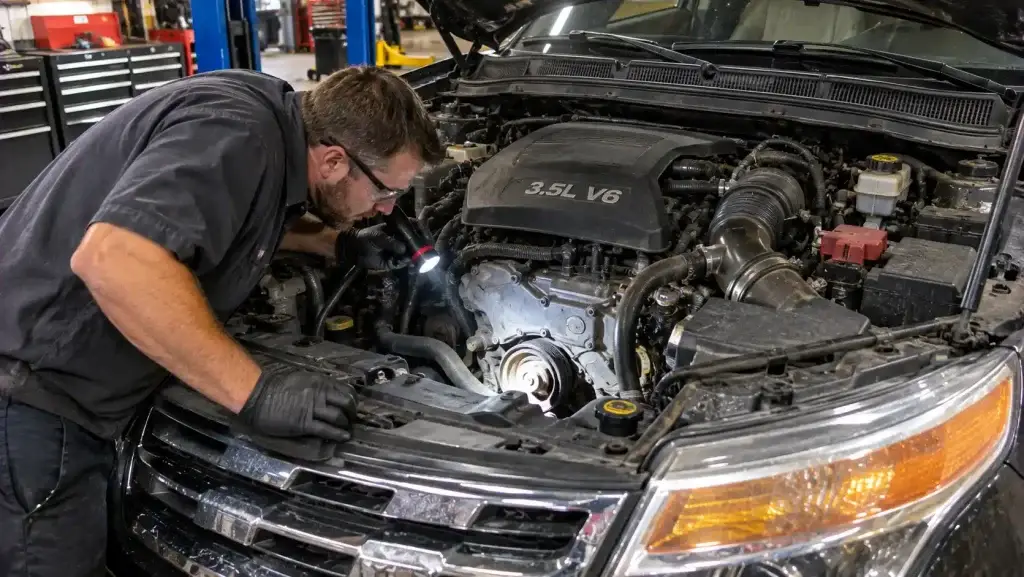
4.6L V8 (2002–2010): the most reliable older Explorer engine
The 4.6L Modular V8 is the engine most often recommended for older Explorers, and the 2006–2010 version pairs it with a six-speed automatic. It’s thirsty, but it avoids the V6’s timing chain trouble. If you want a body-on-frame Explorer for towing, this is the one.
3.5L V6 (2011–2019): the water pump engine
The naturally aspirated 3.5L Ti-VCT was the default fifth-gen engine. It’s smooth and makes decent power, but its internal water pump is the single biggest reason to be careful with 2011–2019 Explorers. A replaced pump, with receipts, makes one of these a much safer buy.
2.3L EcoBoost (2016–present): the efficient choice
The 2.3L four-cylinder EcoBoost engine replaced the 2.0L in 2016 and became the base engine in 2020, making 300 hp in the sixth generation. It’s strong and efficient. Note that a class action filed in 2025 alleges coolant intrusion in 2.3L EcoBoost engines, including 2016–2024 Explorers. These are allegations, not findings.
3.5L EcoBoost (2013–2019): Sport and Platinum power
The twin-turbo 3.5L EcoBoost powered the Explorer Sport and Platinum. In this transverse layout it shares the internal water pump design with the non-turbo 3.5L. For the wider picture on this engine family, see our guide to 3.5 EcoBoost problems.
3.0L EcoBoost (2020–present): ST and Platinum power
The twin-turbo 3.0L V6 makes 400 hp in the ST (and in all V6 trims since the 2025 refresh, per CarGurus). Its main documented problem is the 2020–2022 rear axle bolt recall. Ford noted that hard launches, which ST owners tend to do, make bolt failure more likely.
3.3L hybrid (2020–2023)
The hybrid pairs a 3.3L V6 with an electric motor for 318 hp and about 27 mpg combined, per CarGurus. Ford dropped it after 2023. The Police Interceptor Utility also uses 3.3L hybrid and non-hybrid V6s, and some owners favor later police 3.3L trucks. Ex-police units have usually been driven hard, though, so inspect them closely.
Most reliable Ford Explorer engines, in short: the 4.6L V8 for older trucks, and the 2.3L or 3.0L EcoBoost in a 2022–2023 or newer sixth-gen.
Ford Explorer ST Reliability
The Ford Explorer ST arrived for 2020 with the 400-hp 3.0L twin-turbo V6, a sport-tuned suspension and the 10-speed automatic. Ford Explorer ST reliability tracks the rest of the sixth generation: the 2020 launch year is the riskiest, and 2022–2023 are the safest bets.
The ST-specific concern is the rear axle bolt. Because aggressive launches stress the bolt, STs were more exposed before the final 23V-675 fix. On any 2020–2022 ST, confirm that recall was completed and listen for clunking or grinding from the rear under acceleration.
Used Ford Explorer Buying Checklist
Is buying a used Ford Explorer a good idea? It can be, if you pick the right year and check these items first.
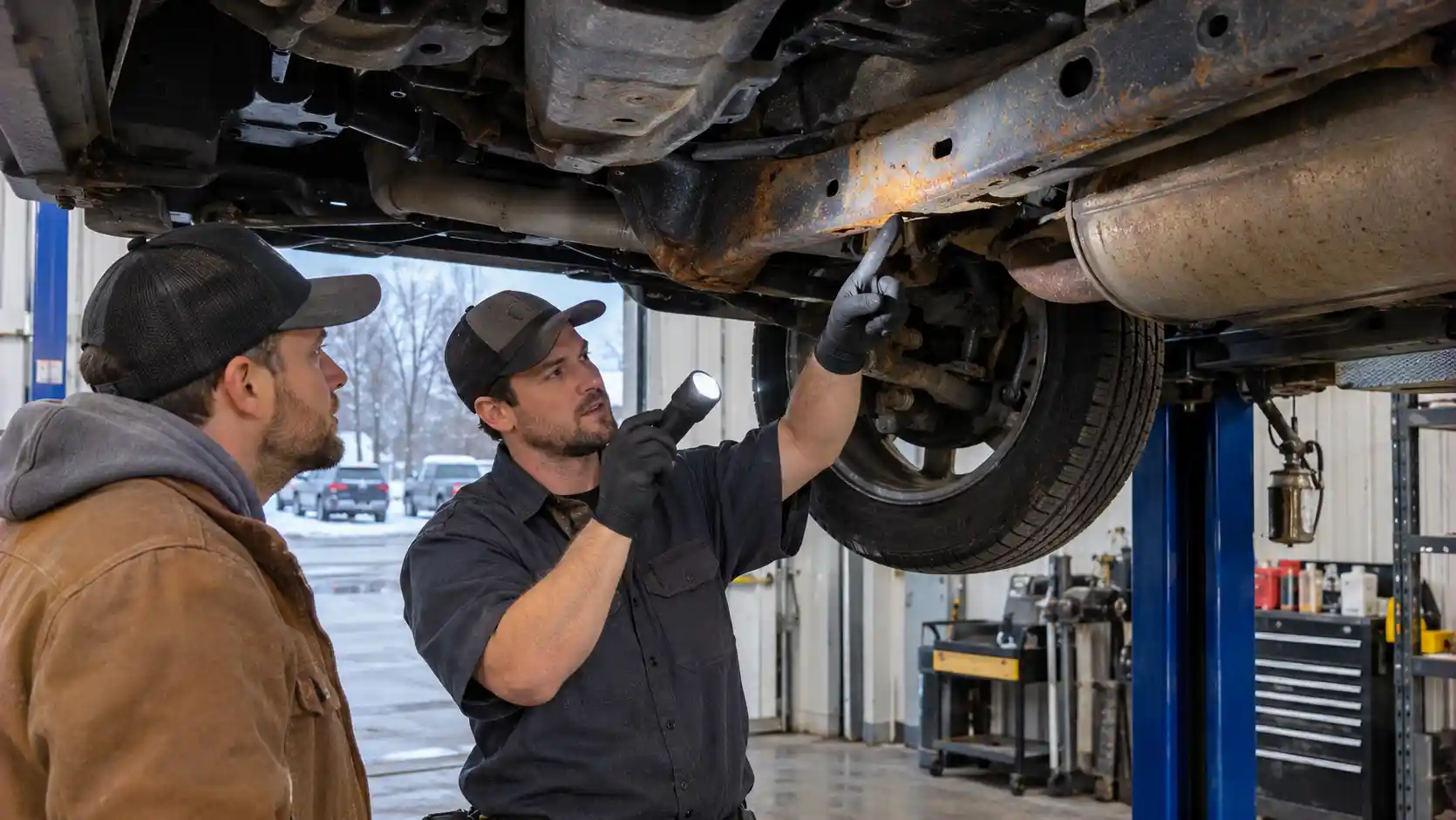
- Run the VIN through the NHTSA recall lookup and Ford’s recall lookup. On 2020–2022 trucks, confirm the rear axle bolt recall (23V-675) is complete. On 2011–2017 trucks, ask whether the exhaust odor service (17N03) was done.
- Ask for water pump history on any 2011–2019 3.5L V6 or 3.5L EcoBoost. Pull the dipstick and the oil fill cap: milky or tan sludge points to coolant in the oil. A coolant reservoir that keeps dropping with no visible leak is another warning sign.
- Test the transmission. Look for slipping or harsh shifts on 2002–2010 five-speed automatics, and rough or delayed shifts on any year.
- Smell the cabin on 2011–2017 trucks with the A/C on recirculate and under hard acceleration. Exhaust odor means the sealing service may not have been done, or the rear of the body was poorly repaired after a crash.
- Listen at cold start. A rattle on a 4.0L V6 suggests timing chain tensioner wear.
- Listen for rear clunks on 2020–2022 trucks, especially STs: clunking or grinding under acceleration can mean a failing axle bolt.
- Check AWD trucks for fluid leaks or a burnt smell near the power transfer unit (2011–2019).
- Inspect for rust on body-on-frame trucks (2010 and older), especially the frame and rocker panels.
- Be careful with ex-police Police Interceptor Utility trucks. Long idle hours and hard use can wear them faster than the mileage suggests.
- Get a pre-purchase inspection from an independent mechanic, including a scan for stored codes.
If you own a sixth-gen truck and do your own maintenance, a Ford Explorer 2020–2024 workshop manual covers factory procedures, torque specs and wiring diagrams.
If a three-row Explorer is more SUV than you need, the smaller Escape is worth a look. Our guide to Ford Escape years to avoid covers which years of that SUV are safe buys.
Ford Explorer Reliability: FAQs
What’s the best Ford Explorer to buy?
For most buyers, the best Ford Explorer to buy is a 2022 or 2023 with the 2.3L or 3.0L EcoBoost and the rear axle bolt recall completed. On a budget, a 2018–2019 with water pump records is the best crossover-era choice. A 2009–2010 with the 4.6L V8 is the most durable older option.
Are Ford Explorers reliable?
Some years are and some aren’t. The 2009–2010, 2018–2019 and 2022–2023 Explorers have strong records, while 2002–2005, 2011, 2013, 2016 and 2020 have far more complaints. Most outlets rate the Explorer about average for its class overall, below the Toyota Highlander and Honda Pilot.
What is the most reliable Ford Explorer year?
By NHTSA complaint counts, the most reliable Ford Explorer years are 2009 and 2010 among older trucks, 2019 in the fifth generation, and 2022–2023 among recent models. The 2024 also has very few complaints so far, but it hasn’t been on the road as long.
What year did the Ford Explorer get bigger?
The Explorer grew most noticeably for 2002, when the third generation added an optional third-row seat and a new independent rear suspension, and again for 2020, when the sixth generation got larger outside and roomier inside. The 2011 redesign also changed its shape dramatically, switching to a car-like unibody crossover.
What years did the Ford Explorer have transmission problems?
The worst transmission years are 2002–2005, whose five-speed automatic was a frequent failure point, and the five-speed carried into the 2006–2010 V6 trucks. Owners of 2011–2019 AWD Explorers also report power transfer unit (PTU) failures. Sixth-gen trucks use the 10-speed 10R60 automatic. Test-drive for harsh or delayed shifts, as with any used vehicle.
Is buying a used Ford Explorer a good idea?
Yes, if you choose carefully. Pick one of the better years, confirm the recalls are done, check water pump history on 2011–2019 V6 models and get a pre-purchase inspection. CarGurus notes that used Explorer prices have risen more slowly than the overall used market, which can work in a buyer’s favor.
What are the most common Ford Explorer problems?
The most common Ford Explorer problems by era are transmission failures and timing chain wear (2002–2010), internal water pump failure and exhaust odor complaints (2011–2019), and launch-year recalls including the rear axle bolt (2020–2022).